
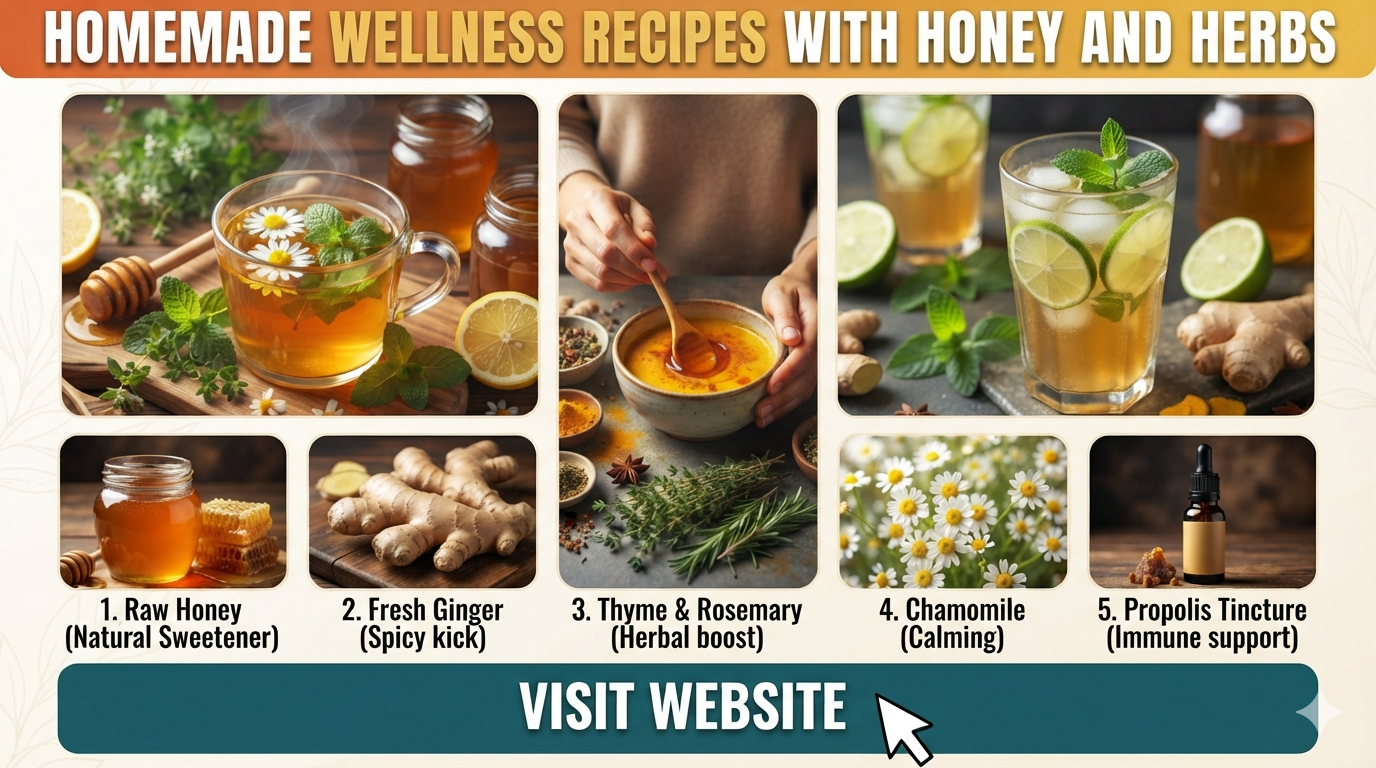
Homemade Wellness Recipes with Honey and Herbs
The Golden Apothecary: A Master Guide to Homemade Wellness with Honey and Herbs
For millennia, the intersection of the beehive and the botanical garden has served as the foundation of human medicine. From the papyrus scrolls of ancient Egypt to the monastic gardens of medieval Europe, the pairing of honey and herbs—often referred to as the “Golden Synergy”—has been utilized to heal wounds, soothe respiratory ailments, and fortify the immune system. Honey is not merely a sweetener; it is a complex biological substance, a “living” food containing enzymes, antioxidants, and antimicrobial compounds. When combined with the concentrated volatile oils and phytochemicals of medicinal herbs, honey acts as both a potent preservative and a highly effective delivery system, carrying the healing properties of plants directly into the body’s tissues.
The Science of Honey: Why It Is the Ultimate Carrier
Before diving into specific recipes, one must understand why honey is the superior medium for herbal extraction compared to sugar or synthetic syrups.
The Antimicrobial Powerhouse
Raw honey contains an enzyme called glucose oxidase. When honey comes into contact with moisture (including the moisture in our bodies or the water content in fresh herbs), this enzyme produces low levels of hydrogen peroxide, which is toxic to many types of harmful bacteria. Furthermore, its high sugar content and low pH (acidic) create an environment where most pathogens cannot survive.
The Humectant and Emollient
In topical applications, honey is a humectant, meaning it draws moisture from the air into the skin. In respiratory wellness, it acts as a demulcent, coating the throat and providing a protective film that calms cough reflexes and reduces inflammation.
The Transdermal and Internal Delivery System
Honey’s unique chemical structure allows it to bypass certain digestive barriers, helping the body absorb herbal constituents more efficiently. It is also an “Anupana” in Ayurvedic medicine—a vehicle that carries the medicinal properties of herbs deeper into the bodily tissues.
Essential Techniques: Mastering Honey-Based Preparations
To create professional-grade wellness products at home, you must master four primary methods: Infusions, Oxymels, Electuaries, and Syrups.
1. Herbal Honey Infusions (Solar and Heat Methods)
Infusions are the most basic form of herbal honey. They are used for flavoring, teas, or direct medicinal consumption.
- The Solar Method (Slow): Place dried herbs in a clean glass jar, filling it about halfway. Pour raw honey over the herbs until the jar is full. Stir with a clean wooden skewer to remove air bubbles. Cap tightly and place in a sunny windowsill for 2–4 weeks, turning the jar daily. The gentle heat of the sun extracts the oils without damaging the honey’s enzymes.
- The Double Boiler Method (Fast): If you need the remedy immediately, place the herb and honey mixture in a double boiler. Heat on the absolute lowest setting (never exceeding 110°F/43°C) for 4–6 hours. Strain while warm.
2. Oxymels: The Ancient Vinegar-Honey Blend
The word “oxymel” comes from the Greek oxymeli, meaning “acid and honey.” This preparation dates back to Hippocrates. It combines the probiotic and solvent properties of Apple Cider Vinegar (ACV) with the soothing nature of honey.
- Standard Ratio: 1 part herb, 1 part ACV, 1 part Honey.
- Best for: Respiratory congestion, digestive sluggishness, and mineral-rich tonics.
3. Electuaries: Herbal Pastes
An electuary is a thick paste made by mixing finely powdered herbs directly into raw honey. Since the whole herb is consumed, this is the most potent way to ingest fibrous or root-based medicines like turmeric or ashwagandha.
4. Herbal Honey Syrups
Unlike simple infusions, syrups usually involve a decoction (simmering hard roots or berries in water) which is then thickened with honey. This is the standard method for Elderberry Syrup.
Chapter 1: Immunity and Defensive Wellness
Building a robust immune system requires both daily tonics and “rescue” remedies for acute onset.
The Master Fire Cider (Modern Oxymel)
Fire cider is a legendary folk remedy popularized by herbalist Rosemary Gladstar. It is a circulatory stimulant and immune booster designed to “blast” through congestion.
Ingredients:
- 1/2 cup fresh grated Horseradish root (decongestant)
- 1/2 cup fresh grated Ginger root (anti-inflammatory)
- 10 cloves of Garlic, smashed (antibacterial/antiviral)
- 2 Habanero peppers, sliced (thermogenic)
- 1 Lemon, zested and juiced
- 1 tablespoon Turmeric powder
- Raw Apple Cider Vinegar (with the “Mother”)
- 1 cup Raw Wildflower Honey
Instructions:
- Place all vegetables and spices into a quart-sized mason jar.
- Cover with ACV until the liquid is two inches above the ingredients.
- Use a piece of parchment paper under the metal lid (to prevent corrosion).
- Store in a dark place for 4 weeks, shaking daily.
- Strain out the solids.
- Stir in the raw honey until fully incorporated.
- Dosage: 1 tablespoon daily for prevention, or up to 3 times daily if feeling ill.
Elderberry and Rosehip Immune Syrup
Elderberries prevent viruses from attaching to cell walls, while rosehips provide a massive dose of Vitamin C.
Ingredients:
- 1 cup dried Elderberries
- 1/2 cup dried Rosehips
- 3 cups filtered water
- 1 stick of Cinnamon
- 1 cup Raw Honey (preferably Manuka for extra strength)
Instructions:
- Place berries, hips, and cinnamon in a pot with water.
- Bring to a boil, then reduce to a simmer.
- Simmer until the liquid has reduced by half (about 45 minutes).
- Mash the berries to release all juice.
- Strain through a fine-mesh sieve or cheesecloth.
- Let the liquid cool to lukewarm (below 110°F).
- Stir in the honey. Store in the refrigerator for up to 3 months.
Echinacea and Goldenseal Electuary
This “power paste” is used at the first sign of a scratchy throat or swollen lymph nodes.
Ingredients:
- 1/2 cup Raw Honey
- 2 tablespoons Echinacea angustifolia root powder
- 1 teaspoon Goldenseal root powder (use sustainably sourced)
- 1/2 teaspoon Ginger powder
Instructions:
- Mix the powders in a small bowl.
- Slowly fold in the honey until a thick, pliable paste forms.
- Store in a small jar.
- Usage: Roll a teaspoon of the paste into a ball and swallow, or dissolve in warm water.
Chapter 2: Respiratory Health and Lung Support
Honey is a natural cough suppressant, often outperforming over-the-counter dextromethorphan in clinical studies, especially for children.
Thyme and Pine Needle Cough Syrup
Thyme contains thymol, a powerful disinfectant for the lungs. Pine needles are high in Vitamin C and act as an expectorant.
Ingredients:
- 1/2 cup fresh Thyme leaves
- 1/4 cup chopped green Pine needles (ensure they are from a non-toxic pine like White Pine)
- 1 cup water
- 1 cup Raw Honey
Instructions:
- Make a strong tea by steeping the thyme and pine needles in boiled water for 20 minutes, covered.
- Strain the liquid.
- While the tea is still warm but not hot, whisk in the honey.
- This syrup is excellent for deep, “wet” coughs.
Mullein and Marshmallow Root “Dry Cough” Infusion
For dry, hacking coughs where the tissue is irritated and inflamed, we need “mucilaginous” herbs.
Ingredients:
- 2 tablespoons dried Mullein leaf
- 1 tablespoon Marshmallow root
- 1 cup Raw Honey
Instructions:
- Infuse the herbs into the honey using the “Double Boiler Method” for 4 hours.
- Strain carefully (mullein has tiny hairs that can irritate the throat if not filtered through a coffee filter or fine cloth).
- The marshmallow root provides a slippery coating, while the honey and mullein soothe the bronchial tubes.
Chapter 3: Digestive Wellness and Gut Soothing
Honey contains prebiotics that feed beneficial gut bacteria, while specific herbs can calm spasms or stimulate digestion.
Ginger and Peppermint Carminative Honey
A carminative is a herb that helps expel gas and relieve bloating.
Ingredients:
- 1/2 cup fresh Ginger, thinly sliced
- 1/4 cup dried Peppermint leaves
- 1.5 cups Raw Honey
Instructions:
- Use the Solar Infusion method for this recipe.
- The ginger juices will slightly thin the honey, making it a delicious syrup.
- Take a spoonful after heavy meals or stir into hot water for an instant digestive tea.
The “Tummy Tamer” Oxymel (Fennel and Lemon Balm)
Fennel seeds are incredible for bloating, and Lemon Balm calms the “enteric nervous system” (the brain in the gut).
Ingredients:
- 2 tablespoons crushed Fennel seeds
- 1/4 cup dried Lemon Balm
- 1/2 cup Apple Cider Vinegar
- 1/2 cup Raw Honey
Instructions:
- Combine seeds, lemon balm, and ACV in a jar. Let sit for 2 weeks.
- Strain and add honey.
- This is particularly effective for children with “nervous tummies.”
Chapter 4: Stress, Anxiety, and Sleep
Honey helps the brain release melatonin by slightly spiking insulin and allowing tryptophan to cross the blood-brain barrier. Pairing it with “nervine” herbs creates a powerful sedative effect.
Lavender and Valerian “Deep Sleep” Honey
Valerian is a potent sedative, but its smell can be off-putting. Honey masks the flavor perfectly.
Ingredients:
- 1 tablespoon dried Valerian root
- 2 tablespoons dried Lavender flowers
- 1 cup Raw Honey
Instructions:
- Infuse using the heat method for 4 hours.
- Strain and store.
- Take one teaspoon in a cup of chamomile tea 30 minutes before bed.
Holy Basil (Tulsi) Adaptogen Electuary
Holy Basil is an adaptogen, meaning it helps the body “adapt” to stress and lowers cortisol levels.
Ingredients:
- 1/2 cup Raw Honey
- 3 tablespoons Tulsi powder
- 1/2 teaspoon Ashwagandha powder
- A pinch of Cinnamon
Instructions:
- Mix into a thick paste.
- Consume 1 teaspoon daily during periods of high stress to stabilize mood and energy.
Chapter 5: Topical Healing and Skin Care
Honey’s role in wound healing is well-documented; it maintains a moist wound environment and prevents bacterial growth.
Calendula and Honey “Healing Salve”
Calendula is the premier herb for skin regeneration. This honey-based “salve” is excellent for minor burns, scrapes, or eczema.
Ingredients:
- 1/2 cup dried Calendula petals
- 1/2 cup Raw Honey
- 1/4 cup Aloe Vera gel (fresh is best)
Instructions:
- Infuse the Calendula into the honey using the solar method for 2 weeks.
- Strain out the petals.
- Whisk in the Aloe Vera gel until smooth.
- Apply to irritated skin and cover with a light bandage. Note: Because of the honey, this will be sticky; it is meant as a medicinal treatment, not a daily lotion.
Rose and Honey Face Glow Mask
Honey acts as a humectant, while roses are mildly astringent and anti-inflammatory.
Ingredients:
- 2 tablespoons Raw Honey
- 1 teaspoon Rosewater
- 1 teaspoon finely powdered dried Rose petals
- 1 drop Frankincense essential oil (optional)
Instructions:
- Mix all ingredients into a thin paste.
- Apply to a clean face for 15–20 minutes.
- Rinse with warm water. This draws moisture into the skin and reduces redness.
Chapter 6: Culinary Wellness—Integrating Medicine into Food
Wellness doesn’t always have to come from a medicine dropper. Incorporating these ingredients into daily meals ensures a constant baseline of health.
Turmeric and Black Pepper “Golden Honey”
This is a staple for systemic inflammation and joint pain. The piperine in black pepper increases the absorption of curcumin (in turmeric) by 2,000%.
Ingredients:
- 1 cup Raw Honey
- 3 tablespoons Turmeric powder
- 1 teaspoon freshly cracked Black Pepper
- 1/2 teaspoon Ceylon Cinnamon
Instructions:
- Whip all ingredients together until smooth.
- Add a spoonful to oatmeal, yogurt, or spread it on sprouted grain toast.
Sage and Rosemary Infused Finishing Honey
Sage and Rosemary are rich in antioxidants and are known as “brain tonics” that improve memory and concentration.
Ingredients:
- 2 sprigs fresh Rosemary
- 5-6 fresh Sage leaves
- 1 cup Raw Honey
Instructions:
- Place herbs in a jar and cover with honey.
- Let sit for 1 week.
- Use this honey to glaze roasted carrots, sweet potatoes, or as a dip for apples.
The Master List of Herbs and Their Honey Compatibility
To create your own recipes, refer to this compatibility guide:
- For Nerve Pain: St. John’s Wort infused honey.
- For Hormonal Balance: Vitex (Chasteberry) and Honey electuary.
- For Kidney/Bladder Support: Dandelion leaf and Cranberry honey infusion.
- For Heart Health: Hawthorn berry syrup (reduced with honey).
- For Mental Clarity: Gotu Kola and Ginko Biloba electuary.
- For Sore Throats: Sage and Licorice root honey.
Safety, Storage, and Best Practices
To ensure your homemade remedies are safe and effective, adhere to the following guidelines:
1. The Botulism Warning
CRITICAL: Never give honey (raw or processed) to infants under the age of one year. Their digestive systems are not developed enough to handle Clostridium botulinum spores, which are occasionally found in honey.
2. Moisture Content
When using fresh herbs (like ginger or fresh garlic) in honey, you introduce water. This can raise the moisture content of the honey above 18%, which may lead to fermentation.
- Solution: Store infusions made with fresh ingredients in the refrigerator, or use dried herbs for shelf-stable preparations.
3. Temperature Control
Heating honey above 110°F (43°C) destroys the delicate enzymes (like amylase and catalase) and volatile compounds that provide its medicinal value. Always use a thermometer when using the double-boiler method.
4. Sourcing
- The Honey: Always use “Raw,” “Unfiltered” honey. Local honey is preferred for allergy relief (it contains local pollens), while Manuka honey (UMF 15+) is preferred for intense antibacterial needs.
- The Herbs: Use organic or wild-harvested herbs. Pesticide residues on herbs can be concentrated during the infusion process.
5. Storage
Store your honey-herb creations in amber or dark glass jars to protect the delicate phytochemicals from light degradation. Most honey infusions will last 1–2 years if kept cool and dry. Oxymels and Syrups have a shorter shelf life (6 months to 1 year) due to higher moisture content.
Conclusion: The Path to Self-Reliance
Creating your own wellness recipes with honey and herbs is more than just a hobby; it is a reclamation of ancestral knowledge. It allows you to control the quality of your medicine, avoid synthetic additives, and develop a deeper connection with the natural world. Whether it is a jar of Fire Cider aging in your pantry or a pot of Lavender Honey on your nightstand, these preparations represent a holistic approach to health—one that is as delicious as it is effective. By mastering these techniques, you become the alchemist of your own kitchen, turning the gifts of the bees and the earth into a lifetime of vitality.