
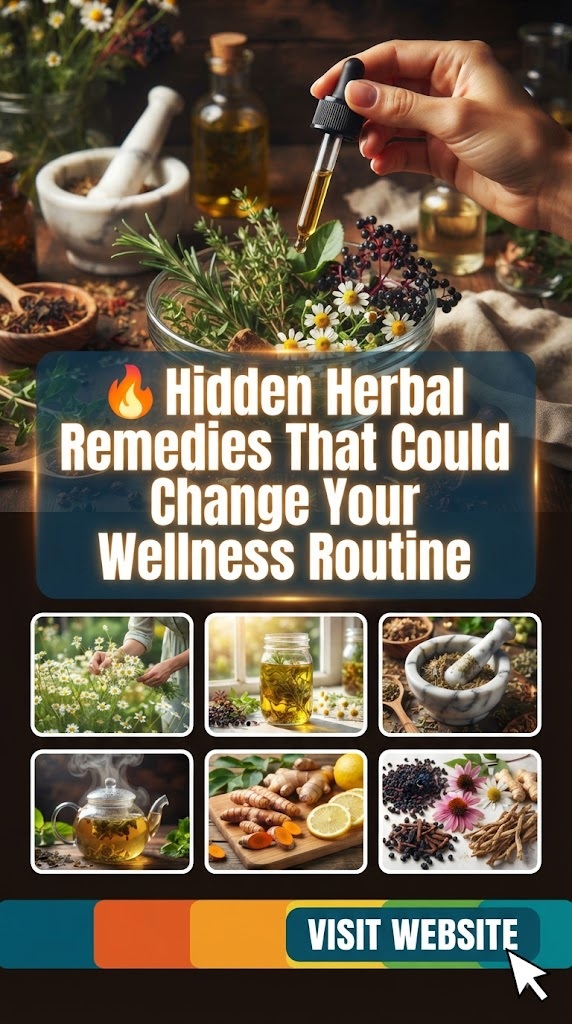
Herbal Healing Secrets You Should Know
Herbal Healing Secrets: The Ultimate Guide to Nature’s Pharmacy
For millennia, the Earth has provided a vast, silent pharmacy beneath our feet. Long before the advent of synthetic laboratories and mass-produced pharmaceuticals, humanity relied on the intricate chemistry of plants to heal wounds, soothe minds, and cure ailments. Today, we are witnessing a massive resurgence in herbalism—not as a replacement for modern medicine, but as a vital, holistic companion to it.
The secret to herbal healing isn’t just about knowing which plant cures which headache; it’s about understanding the synergy between human biology and the botanical world. This comprehensive guide will pull back the curtain on ancient herbal secrets, providing you with the knowledge to create your own potent remedies at home.
Part 1: The Foundations of Herbal Wisdom
The Philosophy of Holistic Healing
Unlike conventional medicine, which often seeks to isolate a single active compound to target a specific symptom, herbalism embraces the “whole plant” philosophy. A plant contains hundreds of phytochemicals—alkaloids, flavonoids, tannins, and volatile oils—that work in harmony to provide a balanced effect on the body. This synergy often reduces side effects and increases the bioavailability of the healing agents.
Understanding Plant Constituents
To master herbal healing, you must understand what makes a plant “medicinal”:
- Alkaloids: Potent nitrogen-based compounds (like the caffeine in coffee or the berberine in Goldenseal) that have strong physiological effects.
- Flavonoids: Powerful antioxidants that protect cells and reduce inflammation (found in Hawthorn and Elderberry).
- Tannins: Astringent compounds that contract tissues, useful for stopping bleeding or tightening skin (found in Witch Hazel and Oak bark).
- Mucilage: Slippery substances that soothe inflamed mucous membranes (found in Marshmallow root and Slippery Elm).
Part 2: The Master Techniques – How to Prepare Your Medicine
Before we dive into specific recipes, you must master the fundamental methods of herbal extraction. The “secret” is knowing which solvent (water, alcohol, oil, or vinegar) best draws out the medicine from a specific plant part.
1. Water Extractions: Infusions and Decoctions
Water is the most common solvent, but the temperature and time depend on the plant’s toughness.
- Standard Infusion: Used for delicate parts like leaves, flowers, and soft stems (e.g., Peppermint, Chamomile).
- Method: Pour boiling water over the herbs, cover tightly (to keep volatile oils from escaping), and steep for 10–20 minutes.
- Decoction: Used for “hard” materials like roots, bark, and berries (e.g., Ginger, Burdock, Cinnamon).
- Method: Place herbs in a pot with cold water. Bring to a boil, then simmer for 20–40 minutes until the liquid is reduced by about one-third.
2. Tinctures: The Concentrated Spirit
Tinctures use alcohol to extract medicinal properties that water cannot. They are shelf-stable for years and highly concentrated.
- The Secret Ratio: For dried herbs, use a 1:5 ratio (1 part herb to 5 parts alcohol). For fresh herbs, use a 1:2 ratio.
- The Solvent: Use 80–100 proof vodka for most herbs. Use 190 proof grain alcohol for resins and gums.
3. Infused Oils and Salves
For topical healing, herbs are infused into carrier oils (like Olive or Jojoba) and then thickened with beeswax to create salves.
- The Folk Method: Fill a jar halfway with dried herbs, cover with oil, and let sit in a sunny window for 4–6 weeks.
- The Quick Method: Heat herbs and oil in a double boiler on very low heat for 3–5 hours.
Part 3: The “Green Pharmacy” – 10 Essential Herbs and Their Secrets
To build a powerful home apothecary, you don’t need hundreds of plants. You need these ten powerhouses.
1. Elderberry (Sambucus nigra): The Viral Shield
Elderberry is world-renowned for its ability to inhibit the replication of flu and cold viruses.
- The Secret: Elderberries contain hemagglutinin protein, which prevents a virus from piercing a cell wall.
- Best For: Flu prevention, respiratory congestion, and immune modulation.
2. Turmeric (Curcuma longa): The Golden Healer
The active compound, curcumin, is one of the most powerful anti-inflammatories on Earth.
- The Secret: Curcumin has low bioavailability. To “unlock” it, you must consume it with black pepper (piperine) and a healthy fat.
- Best For: Arthritis, digestive inflammation, and brain health.
3. Ashwagandha (Withania somnifera): The Stress Buster
As a premier adaptogen, Ashwagandha helps the body “adapt” to stress by modulating the endocrine system.
- The Secret: It doesn’t just sedate; it provides “calm energy” by regulating cortisol levels.
- Best For: Anxiety, adrenal fatigue, and hormonal balance.
4. Nettle (Urtica dioica): The Nutrient Bomb
Often dismissed as a weed, Nettle is a multivitamin in plant form, rich in iron, calcium, and magnesium.
- The Secret: A “long infusion” (steeping for 4–8 hours) is required to pull out the dense mineral content.
- Best For: Seasonal allergies, anemia, and kidney support.
5. Calendula (Calendula officinalis): The Skin’s Best Friend
These bright orange petals are the gold standard for healing skin tissue.
- The Secret: Calendula stimulates collagen production and is antimicrobial without being harsh.
- Best For: Cuts, burns, eczema, and post-surgery scars.
6. Lemon Balm (Melissa officinalis): The Gladdening Herb
A member of the mint family, Lemon Balm is famous for lifting the spirits and calming the nerves.
- The Secret: It has potent antiviral properties specifically against the herpes simplex virus (cold sores).
- Best For: Depression, insomnia, and digestive upset.
7. Ginger (Zingiber officinale): The Circulatory Fire
Ginger moves blood and settles the stomach.
- The Secret: Fresh ginger is better for nausea; dried ginger is “hotter” and better for deep-seated cold and congestion.
- Best For: Motion sickness, menstrual cramps, and poor circulation.
8. Valerian (Valeriana officinalis): Nature’s Valium
The root of the Valerian plant is a powerful sedative.
- The Secret: A small percentage of people have a “paradoxical reaction” where Valerian makes them hyper rather than sleepy.
- Best For: Severe insomnia and muscle spasms.
9. Echinacea (Echinacea angustifolia/purpurea): The Immune Sentinel
Echinacea works by increasing white blood cell activity.
- The Secret: It is most effective when taken at the very first “tingle” of a sore throat, rather than mid-way through an illness.
- Best For: Acute infections and wound healing.
10. Peppermint (Mentha x piperita): The Digestive Engine
High in menthol, peppermint relaxes the smooth muscles of the digestive tract.
- The Secret: Peppermint tea is excellent for IBS, but should be avoided if you have severe acid reflux, as it relaxes the esophageal sphincter.
- Best For: Bloating, headaches, and mental focus.
Part 4: Complete Recipes – How to Make Your Own Remedies
Recipe 1: The “Immune Armor” Elderberry Syrup
This syrup is a staple for every household during winter.
Ingredients:
- 1 cup dried Elderberries
- 3 cups water
- 1 tbsp fresh Ginger (grated)
- 1 tsp Cinnamon powder (or 1 stick)
- 1/2 tsp Clove powder
- 1 cup Raw Honey (locally sourced is best)
Instructions:
- Place the berries, water, ginger, cinnamon, and cloves in a medium saucepan.
- Bring to a boil, then reduce heat and simmer for 45 minutes to 1 hour, or until the liquid has reduced by half.
- Remove from heat and let cool until it is just warm (not hot).
- Strain the liquid through a fine-mesh strainer or cheesecloth into a glass jar. Squeeze the berries to get every drop of juice.
- Add the raw honey and stir until well combined. The honey acts as both a sweetener and a preservative.
- Store in the refrigerator for up to 3 months. Dosage: 1 tablespoon daily for adults for prevention; 3 tablespoons daily if feeling ill.
Recipe 2: Traditional “Fire Cider” (The Ultimate Tonic)
Fire cider is a spicy, pungent apple cider vinegar infusion used to boost circulation and ward off sickness.
Ingredients:
- 1/2 cup fresh Horseradish root (grated)
- 1/2 cup fresh Ginger root (grated)
- 1 Onion (chopped)
- 10 cloves of Garlic (crushed)
- 2 Jalapeño peppers (sliced)
- 1 Lemon (zest and juice)
- 1 tbsp Turmeric powder
- Raw Apple Cider Vinegar (with “The Mother”)
- Raw Honey to taste
Instructions:
- Place all vegetables, roots, and spices into a wide-mouth quart jar.
- Pour the Apple Cider Vinegar over the ingredients until the jar is full.
- Place a piece of parchment paper under the lid (to prevent the vinegar from corroding the metal) and seal tightly.
- Shake well and store in a dark, cool place for 4 weeks. Shake the jar daily.
- After 4 weeks, strain out the solids using cheesecloth.
- Add honey to the liquid until you reach your desired balance of sweet/spicy/sour. Dosage: A shot glass a day to keep the digestive and immune systems firing.
Recipe 3: “Deep Sleep” Tincture (The Valerian-Hops-Skullcap Blend)
This tincture is designed for those who have trouble turning off their brain at night.
Ingredients:
- 1 part dried Valerian Root
- 1 part dried Skullcap
- 1 part dried Passionflower
- 1/2 part dried Hops
- 80-proof Vodka
Instructions:
- Fill a glass jar halfway with the dried herb mixture.
- Pour the vodka over the herbs until the jar is full, ensuring the herbs are completely submerged.
- Seal the jar and store in a cool, dark cabinet.
- Shake the jar every day for 6 weeks.
- Strain through a cheesecloth, squeezing hard to get all the liquid.
- Store the liquid in dark amber dropper bottles. Dosage: 2–3 full droppers 30 minutes before bedtime.
Recipe 4: Calendula & Comfrey “Healing Salve”
This is the ultimate “everything balm” for scrapes, dry skin, and minor burns.
Ingredients:
- 1 cup dried Calendula flowers
- 1/2 cup dried Comfrey leaf
- 1.5 cups Olive oil or Sweet Almond oil
- 1/4 cup Beeswax pellets
- 10 drops Lavender essential oil (optional)
Instructions:
- Infuse the Oil: Place the herbs and oil in a double boiler. Heat on the lowest setting for 4 hours. Do not let the oil smoke.
- Strain the oil through cheesecloth into a clean bowl.
- Clean the double boiler, then add the infused oil back in.
- Add the beeswax pellets and stir until completely melted.
- Remove from heat and stir in the essential oil.
- Pour immediately into small tin containers or glass jars.
- Let sit undisturbed until cool and solid.
Recipe 5: The “Nerve-Soothe” Oxymel
An oxymel is an ancient preparation using honey and vinegar. It’s perfect for herbs that don’t taste great in tea.
Ingredients:
- 1/2 cup dried Holy Basil (Tulsi)
- 1/4 cup dried Lemon Balm
- 1 cup Apple Cider Vinegar
- 1 cup Raw Honey
Instructions:
- Place the herbs in a jar.
- Mix the honey and vinegar together until combined, then pour over the herbs.
- Let infuse for 2 weeks in a cool, dark place.
- Strain and bottle. Dosage: 1 teaspoon as needed for stress or anxiety.
Part 5: The Secret of Bioavailability and Timing
Many people try herbalism and claim “it didn’t work.” Often, the failure isn’t the herb—it’s the method or the timing.
1. The Fat-Soluble Secret
Herbs like Turmeric, Milk Thistle, and Ashwagandha are fat-soluble. If you take them on an empty stomach with just water, your body will excrete most of the active compounds. Always take these with a meal or a spoonful of coconut oil.
2. The Empty Stomach Exception
Bitters (like Gentian or Dandelion root) are used to stimulate digestion. For these to work, they must be taken 15–20 minutes before a meal. The bitter taste on the tongue sends a signal to the vagus nerve to begin secreting digestive enzymes.
3. The Power of Consistency
Unlike a pharmaceutical painkiller that works in 30 minutes, many herbs (especially adaptogens) work through “trophorestoration.” This means they slowly rebuild and nourish an organ system over time. You must take them consistently for 3–6 weeks to feel the full effect.
4. Harvesting with the Moon (Ancient Secret)
While often dismissed as folklore, many master herbalists still harvest according to the lunar cycle.
- Roots: Harvest during the New Moon when the plant’s energy is pulled downward.
- Leaves and Flowers: Harvest during the Full Moon when the sap and energy are pulled upward into the aerial parts.
Part 6: Herbal Safety and Contraindications
Nature is powerful, and “natural” does not always mean “safe.” Respecting the potency of plants is the hallmark of a true herbalist.
1. The Blood-Thinner Warning
Many herbs, such as Ginger, Garlic, Ginkgo, and Turmeric, have mild blood-thinning properties. If you are already on medications like Warfarin or Coumadin, consult a doctor before using therapeutic doses of these herbs.
2. Pregnancy and Nursing
Certain herbs are “emmenagogues,” meaning they stimulate blood flow to the pelvic area and can cause uterine contractions (e.g., Mugwort, Pennyroyal, and high doses of Sage). Always check safety profiles specifically for pregnancy.
3. Liver Metabolism (The CYP450 Pathway)
St. John’s Wort is the most famous example of an herb that “speeds up” the liver’s detoxification process. This sounds good, but it can cause the body to metabolize prescription drugs (like birth control or heart medication) too quickly, rendering them ineffective.
Part 7: Building Your Herbal Home Laboratory
To move from a beginner to an expert, you need the right tools.
Essential Equipment:
- Digital Scale: Herbalism is a science of ratios. Measuring by weight (grams) is much more accurate than measuring by volume (cups).
- Mortar and Pestle: For bruising fresh herbs and crushing seeds to release oils.
- Amber Glass Bottles: Light is the enemy of herbal medicine. Store your tinctures and oils in dark glass to prevent oxidation.
- Cheesecloth and Muslin: For straining preparations without leaving sediment.
- Stainless Steel or Glass Pots: Never use aluminum, as it can react with the plant’s tannins and alkaloids.
Sourcing Your Herbs:
The quality of your medicine is only as good as the quality of your plants.
- Wildcrafting: The act of harvesting herbs from the wild. Secret Rule: Never harvest more than 10% of a stand, and never harvest near roadsides or sprayed farm fields.
- Buying: Look for “Organic,” “Non-Irradiated,” and “Sustainably Wild-Harvested” labels. If the herb looks grey and smells like dust, its medicine has vanished. It should be vibrant in color and aroma.
Part 8: Seasonal Herbalism – Living in Rhythm
The final secret of herbal healing is learning to change your remedies with the seasons.
Spring: The Great Detox
In spring, the body naturally wants to “lighten up” after a heavy winter. This is the time for Dandelion greens, Nettle, and Cleavers. These herbs stimulate the lymphatic system and the kidneys to flush out metabolic waste.
Summer: Cooling and Hydrating
When the heat rises, we use “refrigerant” herbs. Hibiscus, Peppermint, and Rose are excellent for cooling the blood and soothing the nervous system during hot months.
Autumn: Building the Reserve
As the leaves fall, we focus on the lungs and the immune system. This is the time to start your Fire Cider and harvest Astragalus root to build up deep immune reserves for the winter.
Winter: Warming and Circulating
Winter is for the “warming” spices. Cinnamon, Cayenne, and Ginger keep the blood moving and the digestive fire hot, preventing the “stagnation” that often leads to winter blues and sluggishness.
Part 9: The Mind-Body Connection – Nootropics and Nervines
Herbalism isn’t just for the physical body; it is a profound tool for mental optimization.
Nootropics (Brain Boosters)
- Gotu Kola: Known in India as the “Student’s Herb,” it enhances memory and cognitive function by improving capillary circulation in the brain.
- Rosemary: Even the scent of Rosemary has been shown to improve recall. A rosemary tincture or tea is perfect for long workdays.
Nervines (System Soothers)
- Skullcap: The “secret” for the “monkey mind.” If you can’t stop thinking about your to-do list, Skullcap helps disconnect the mental loops.
- Oat Tops (Avena sativa): If you feel “fried” or “burnt out,” Milky Oat tops are the ultimate nervous system trophorestorative. They literally “feed” the nerves.
Conclusion: Becoming Your Own Healer
The journey into herbal healing is a lifelong path of discovery. It requires a shift in perspective—moving away from the “pill for an ill” mentality and toward a deep, intuitive relationship with the natural world.
By mastering the secrets of extraction, understanding the synergy of plant chemistry, and respecting the rhythms of the seasons, you empower yourself with a form of healthcare that is sustainable, gentle, and profoundly effective. Start small—perhaps with a simple pot of peppermint tea or a jar of infused calendula oil—and watch as the “Green Pharmacy” transforms your health and your life.
The plants are waiting. They have been here all along, holding their secrets for those ready to listen. Now, you have the keys to unlock them.