
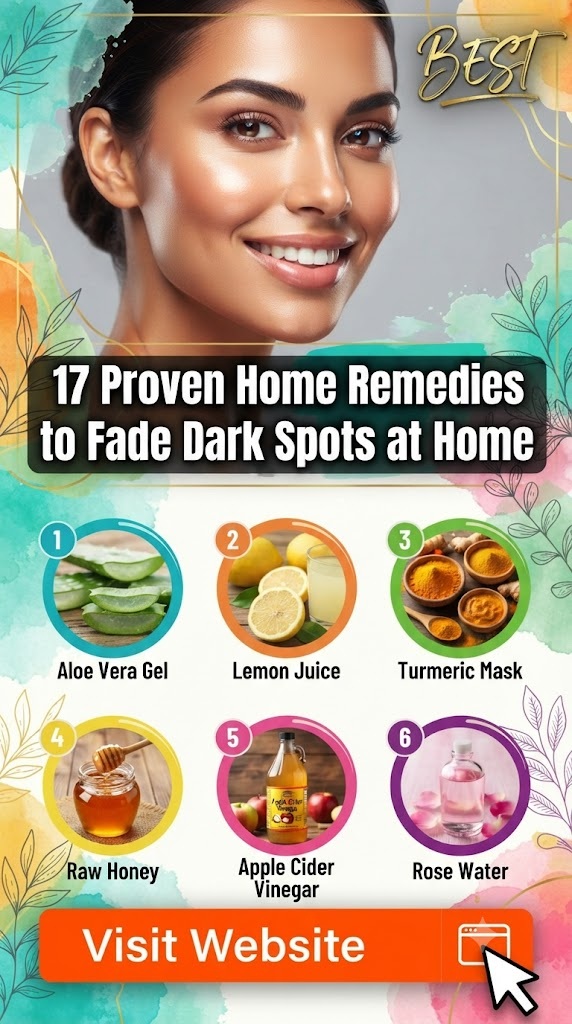
17 Dark Spot Home Remedies
The Ultimate Guide to Erasing Dark Spots: 17 Proven Home Remedies for a Flawless Complexion
Hyperpigmentation, commonly referred to as dark spots, age spots, or “liver spots,” is one of the most persistent skincare concerns for men and women alike. Whether they are caused by years of sun exposure, hormonal shifts during pregnancy (melasma), or the stubborn aftermath of an acne breakout (post-inflammatory hyperpigmentation), these patches of darkened skin can affect your confidence.
Understanding the Science of Dark Spots
Before diving into the remedies, it is crucial to understand what you are treating. Dark spots occur when the skin produces an excess of melanin, the pigment that gives skin its color.
Several factors trigger this overproduction:
- UV Exposure: The most common cause. UV rays trigger melanocytes to produce melanin as a defense mechanism.
- Hormones: Estrogen and progesterone can stimulate the overproduction of melanin, leading to melasma.
- Inflammation: Acne, eczema, or skin injuries can cause “trauma” to the skin, resulting in dark marks once the wound heals.
- Aging: As we age, melanocytes become less regulated, leading to “age spots.”
The remedies listed below work through three primary mechanisms: exfoliation (removing dead, pigmented cells), inhibition (stopping the enzyme tyrosinase from producing more melanin), and antioxidant protection (neutralizing free radicals that trigger pigmentation).
Safety First: Pre-Treatment Protocol
Natural ingredients are powerful. To ensure your skin reacts positively, always follow these rules:
- Patch Test: Apply a small amount of the remedy to your inner forearm and wait 24 hours to check for irritation.
- Sun Protection is Mandatory: Many natural lighteners (like lemon or AHAs) make your skin “photosensitive.” If you use these remedies and go into the sun without SPF 30+, your dark spots will likely get darker.
- Consistency is Key: Natural remedies do not work overnight. Expect to see results in 4 to 8 weeks, as that is the time it takes for skin cells to regenerate.
1. Lemon Juice: The Natural Bleaching Agent
Lemon juice is perhaps the most famous home remedy for skin brightening. It contains high concentrations of Vitamin C (ascorbic acid) and Citric Acid, which act as a natural astringent and bleaching agent.
Why It Works
Vitamin C inhibits the enzyme tyrosinase, which prevents melanin production. Citric acid acts as a mild alpha-hydroxy acid (AHA), chemically exfoliating the surface layer of the skin.
The Recipe: Lemon & Honey Spot Treatment
- Ingredients: 1 tablespoon of fresh organic lemon juice, 1 tablespoon of raw honey.
- Preparation: Mix the ingredients in a glass bowl until well combined. The honey acts as a buffer to prevent the lemon from drying out your skin.
- Application: Use a cotton swab to apply the mixture directly to the dark spots. Leave it on for 10–15 minutes.
- Rinse: Wash off with lukewarm water.
- Frequency: 2–3 times per week. Avoid if you have very sensitive skin.
2. Apple Cider Vinegar (ACV): The pH Balancer
ACV contains acetic acid, which research suggests can lighten skin pigmentation and improve the overall texture of the skin.
Why It Works
Acetic acid helps in chemical peeling of the skin. It also balances the skin’s pH, making it less hospitable to the bacteria that cause acne-induced spots.
The Recipe: ACV Toner
- Ingredients: 1 part raw, unfiltered Apple Cider Vinegar (with “the mother”), 3 parts distilled water.
- Preparation: Mix the liquids in a clean bottle.
- Application: After cleansing, soak a cotton pad in the solution and swipe it over the affected areas.
- Rinse: Leave it on for 5 minutes, then rinse thoroughly.
- Frequency: Once daily. If your skin is dry, increase the water ratio to 1:4.
3. Aloe Vera: The Regenerative Healer
Aloe Vera is more than just a sunburn cure. It contains a specific compound called Aloin, which has been scientifically proven to lighten skin.
Why It Works
Aloin is a natural depigmenting compound that works by aggregating melanin granules. It also contains mucopolysaccharides, which bind moisture into the skin, helping the healing process of post-acne scars.
The Recipe: Nighttime Aloe Mask
- Ingredients: Fresh Aloe Vera gel (scraped from the leaf) or 100% pure bottled gel.
- Preparation: If using a leaf, slice it open and scoop out the clear jelly. Blend it for a smooth consistency.
- Application: Apply a thick layer over the dark spots before bed.
- Rinse: Wash it off in the morning.
- Frequency: Every night. This is one of the gentlest remedies available.
4. Turmeric: The Ancient Brightener
Used for centuries in Ayurvedic medicine, Turmeric is a powerhouse for skin health. Its active component, curcumin, is a potent anti-inflammatory and antioxidant.
Why It Works
Curcumin inhibits the production of melanin. Research has shown that turmeric can reduce the appearance of sun damage and improve skin elasticity.
The Recipe: The Golden Glow Mask
- Ingredients: 1 teaspoon turmeric powder, 1 tablespoon chickpea flour (besan), 1 tablespoon milk or yogurt.
- Preparation: Mix into a thick paste. The milk provides lactic acid for extra brightening.
- Application: Apply to the face or specific spots. Let it dry for 20 minutes.
- Rinse: Gently scrub off in circular motions with warm water.
- Pro-Tip: Turmeric can stain. Use an old towel and wash your face twice to remove the yellow tint.
5. Papaya: The Enzymatic Exfoliant
Papaya contains a unique enzyme called papain, which is highly effective at breaking down the proteins that hold dead skin cells together.
Why It Works
By dissolving dead skin cells, papaya allows new, unpigmented skin to rise to the surface. It is excellent for “dull” complexions and stubborn sunspots.
The Recipe: Papaya Pulp Mask
- Ingredients: 1/2 cup of ripe mashed papaya, 1 teaspoon lime juice.
- Preparation: Mash the papaya until it is a smooth paste. Add the lime juice.
- Application: Apply to the face and neck. Leave for 20 minutes.
- Rinse: Rinse with cool water.
- Frequency: Twice a week.
6. Yogurt and Buttermilk: The Lactic Acid Secret
Dairy products have been used since the time of Cleopatra for skin whitening. The secret lies in Lactic Acid.
Why It Works
Lactic acid is an AHA that is much gentler than glycolic acid. It exfoliates the surface while simultaneously hydrating the skin. It is the best choice for those with dry or sensitive skin.
The Recipe: The Lactic Soak
- Ingredients: 2 tablespoons plain Greek yogurt (full fat) or fresh buttermilk.
- Preparation: No preparation needed.
- Application: Apply a thick layer to the spots. For buttermilk, use a cotton ball to dab it on.
- Rinse: Leave for 20 minutes, then rinse with warm water.
- Frequency: 3–4 times per week.
7. Green Tea: The Antioxidant Shield
Green tea is packed with polyphenols, specifically EGCG (epigallocatechin-3-gallate), which protects against UV damage.
Why It Works
Green tea has a depigmenting effect when applied topically. It reduces the oxidative stress that leads to the overproduction of melanin.
The Recipe: Green Tea Compress
- Ingredients: 1 green tea bag, 1 cup hot water.
- Preparation: Steep the tea bag for 5 minutes. Remove the bag and let it cool completely (you can put it in the fridge).
- Application: Rub the cooled tea bag directly over the dark spots. You can also use the liquid as a facial mist.
- Rinse: No need to rinse.
- Frequency: Twice daily.
8. Red Onion: The Unexpected Lightener
It might sound strange, but red onion (Allium cepa) is a common ingredient in many commercial scar-fading and skin-lightening creams.
Why It Works
Red onions are rich in Vitamin C and acidic compounds that inhibit the action of melanocytes. They are particularly effective for fading surgical scars and deep hyperpigmentation.
The Recipe: Onion Juice Spot Treatment
- Ingredients: 1 small red onion.
- Preparation: Grate the onion and squeeze the pulp through a cheesecloth to extract the juice.
- Application: Use a cotton swab to apply juice to the spots.
- Rinse: Leave for 10 minutes (the smell is strong!), then wash with a mild cleanser.
- Frequency: Once daily.
9. Licorice Root: Nature’s Hydroquinone
Licorice root extract is widely considered the best natural alternative to Hydroquinone (a controversial chemical skin lightener).
Why It Works
It contains Glabridin, which prevents UVB-induced pigmentation and has significant anti-inflammatory properties. It also contains Liquiritin, which helps disperse and remove existing melanin in the skin.
The Recipe: Licorice Infusion
- Ingredients: Licorice root powder or dried roots, distilled water.
- Preparation: Boil 1 cup of water with 2 tablespoons of licorice root. Let it simmer until the water is reduced by half. Cool and strain.
- Application: Apply the liquid to the skin using a cotton pad.
- Rinse: Leave on for 30 minutes or overnight.
- Frequency: Once daily.
10. Honey: The Enzyme Humectant
Raw, unpasteurized honey (like Manuka or forest honey) contains small amounts of hydrogen peroxide and gluconic acid.
Why It Works
Honey acts as a gentle enzymatic exfoliator. Its humectant properties ensure that while the skin is being brightened, the moisture barrier remains intact.
The Recipe: Honey & Cinnamon Spot Paste
- Ingredients: 1 tablespoon raw honey, 1/2 teaspoon cinnamon powder.
- Preparation: Mix well. Cinnamon increases blood flow to the area, speeding up the healing of spots.
- Application: Apply to spots only (cinnamon can be tingly).
- Rinse: After 15 minutes.
- Frequency: 2 times per week.
11. Potato Juice: The Starch Lightener
Potatoes contain an enzyme called catecholase, which is often used in cosmetics to brighten skin tone.
Why It Works
Potato juice is naturally mildly acidic and high in potassium, sulfur, and phosphorus—all of which contribute to skin health and the fading of dark circles and spots.
The Recipe: Potato Slices or Juice
- Ingredients: 1 medium potato.
- Preparation: Either cut thin slices or grate the potato to extract the juice.
- Application: Rub the slice onto the spot or apply the juice with a cotton ball.
- Rinse: Leave it on for 20 minutes until it dries into a white starchy film. Rinse with water.
- Frequency: Daily for best results.
12. Castor Oil: The Deep Penetrator
Castor oil is rich in ricinoleic acid and omega-3 fatty acids.
Why It Works
Unlike many topical treatments that stay on the surface, castor oil penetrates deep into the skin layers. It helps break down the pigment buildup and encourages the growth of healthy tissue.
The Recipe: Castor Oil Massage
- Ingredients: Pure, cold-pressed castor oil.
- Preparation: Warm the oil slightly between your palms.
- Application: Massage a drop of oil directly into the dark spot for 2 minutes.
- Rinse: Leave it on overnight.
- Frequency: Twice daily (morning and night).
13. Sandalwood: The Ancient Indian Secret
Sandalwood (Chandan) has been a staple in Asian beauty rituals for millennia.
Why It Works
It is a natural coolant and anti-inflammatory agent. It helps in soothing the skin after sun exposure, preventing the “tan” from turning into permanent dark spots.
The Recipe: Sandalwood & Rose Water Paste
- Ingredients: 1 tablespoon sandalwood powder, 2 tablespoons pure rose water.
- Preparation: Mix to form a smooth, cooling paste.
- Application: Apply to the entire face or the spots.
- Rinse: Once the paste is completely dry.
- Frequency: 3 times per week.
14. Tomato Juice: The Lycopene Shield
Tomatoes are naturally rich in Lycopene, a powerful antioxidant that protects the skin against photo-damage.
Why It Works
Tomatoes act as a natural astringent and contain vitamins A, C, and K. The acidity helps in clearing up dark spots while the lycopene helps the skin resist future darkening from UV rays.
The Recipe: Tomato & Sugar Scrub
- Ingredients: 1 thick slice of tomato, 1 teaspoon organic sugar.
- Preparation: Sprinkle the sugar on the tomato slice.
- Application: Gently rub the tomato slice in circular motions over the dark spots for 5 minutes. The sugar provides physical exfoliation while the tomato provides chemical exfoliation.
- Rinse: Wash with cool water.
- Frequency: 2 times per week.
15. Cucumber: The Cooling Hydrator
If your dark spots are accompanied by irritation or redness, cucumber is the ideal remedy.
Why It Works
Cucumbers are 96% water and contain silica and antioxidants. They help in soothing the skin and reducing the appearance of pigmentation by hydrating the surrounding cells, making the spots look less prominent.
The Recipe: Cucumber & Lime Mist
- Ingredients: 1/2 cucumber (juiced), 1 teaspoon lime juice.
- Preparation: Mix the juices and put them in a spray bottle.
- Application: Spray on the face after coming in from the sun.
- Rinse: Leave on for 20 minutes before rinsing.
- Frequency: Daily.
16. Parsley: The Vitamin K Brightener
Parsley is surprisingly high in Vitamins C and K.
Why It Works
Vitamin K is essential for skin healing and has been shown to help reduce the appearance of broken capillaries and dark spots.
The Recipe: Parsley Infusion Mask
- Ingredients: A handful of fresh parsley, 1 tablespoon honey, 1 teaspoon lemon juice.
- Preparation: Chop the parsley finely and mash it in a mortar and pestle. Mix with honey and lemon.
- Application: Apply the green paste to the spots.
- Rinse: After 20 minutes.
- Frequency: 2–3 times per week.
17. Orange Peel Powder: The Vitamin C Concentrate
Do not throw away your orange peels! The peel actually contains more Vitamin C than the pulp.
Why It Works
Orange peel powder contains hesperidin, which has been shown to reduce melanin synthesis. It acts as an excellent scrub that brightens the skin instantly.
The Recipe: Orange & Milk Scrub
- Ingredients: 1 tablespoon dried orange peel powder (sun-dry peels and grind them), 1 tablespoon cold milk.
- Preparation: Mix into a grainy paste.
- Application: Apply and scrub very gently on the dark spots.
- Rinse: Wash off after 10 minutes.
- Frequency: 2 times per week.
Advanced Strategies: Enhancing Your Results
Using the remedies above will provide a solid foundation, but to truly erase dark spots and keep them from returning, you must adopt a holistic approach.
The Role of Diet in Pigmentation
What you eat reflects on your skin. To fight hyperpigmentation from the inside out:
- Eat the Rainbow: Consume foods high in Beta-carotene (carrots, sweet potatoes) and Lycopene (cooked tomatoes).
- Vitamin E: This vitamin protects cell membranes from oxidative damage. Include almonds, sunflower seeds, and avocados in your diet.
- Stay Hydrated: Water helps the body flush out toxins that can lead to skin inflammation.
The Importance of the “Moisture Barrier”
Many people make the mistake of over-exfoliating their dark spots. If you strip your skin’s natural oils using too many acidic remedies (like lemon or ACV) at once, you will cause inflammation. Ironically, inflammation triggers melanocytes to produce more melanin.
- The Rule: If your skin feels tight, red, or itchy, stop the treatments and focus on hydration for 3 days using plain Aloe Vera or Jojoba oil.
The Non-Negotiable: Sunscreen
It is a scientific fact: You cannot fade dark spots if you do not wear sunscreen. UV rays are the food that feeds dark spots. Even if you are indoors, UVA rays can penetrate windows. Apply a broad-spectrum SPF 30+ every single morning as the final step of your skincare routine.
When to See a Professional
While home remedies are effective for surface-level pigmentation (sunspots and post-acne marks), some conditions require medical intervention. Consult a dermatologist if:
- The spot changes shape or color: This could be a sign of skin cancer (melanoma).
- The spots are deep (Melasma): Hormonal pigmentation is often “dermal” (deep in the skin) and may require prescription-strength retinoids or hydroquinone.
- No results after 3 months: If you have been consistent and see no change, you may need a professional chemical peel or laser therapy (like Q-switched or Picosure).
Summary Checklist for Your Routine
To make this manageable, here is a sample weekly routine:
- Daily: Apply Aloe Vera at night and SPF 30 during the day.
- Monday/Thursday: Use the Lemon & Honey spot treatment.
- Wednesday/Saturday: Use the Turmeric & Yogurt mask.
- Tuesday/Friday: Apply Potato Juice or ACV Toner.
- Sunday: Give your skin a rest with just honey and hydration.
Final Thoughts
Dark spots are a journey, not a quick fix. The cells that contain the excess pigment were formed weeks ago, and it takes time for the body to cycle them out. By using these 17 natural remedies, you are not just bleaching the skin; you are providing it with the vitamins, enzymes, and antioxidants it needs to heal itself.
Stay patient, stay consistent, and most importantly, protect your skin from the sun. Your journey to a clear, radiant, and even-toned complexion starts in your kitchen. Embrace these natural gifts and watch your dark spots fade into the past.