Chicken and Olive Skillet (Mediterranean
Chicken and Olive Skillet (Mediterranean)
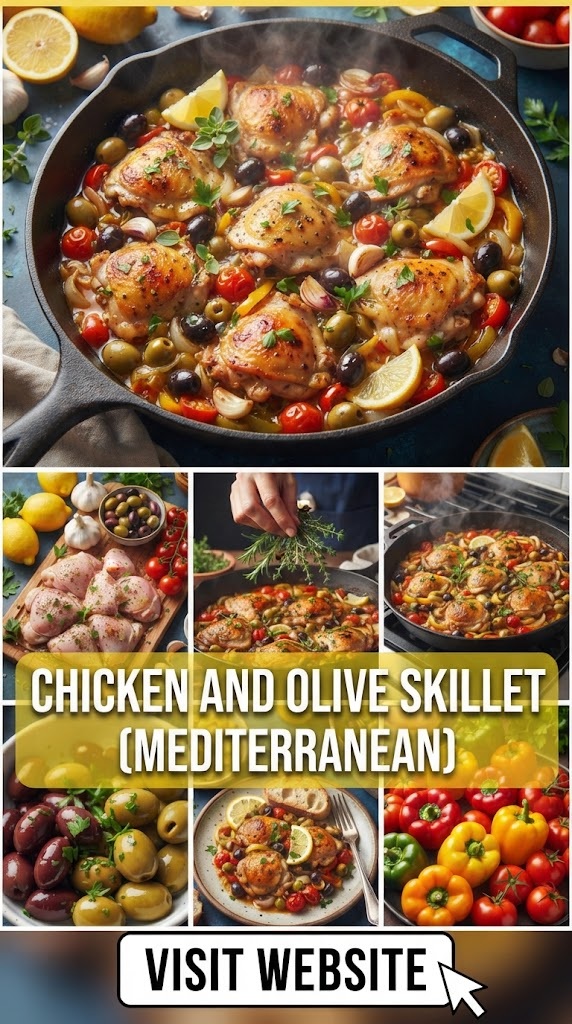
Chicken and olives are a naturally delicious combination, especially when they are cooked together with garlic, tomatoes, herbs, lemon, and olive oil. This Mediterranean Chicken and Olive Skillet is a simple one-pan dinner that brings bright Mediterranean flavors to the table without requiring complicated techniques or a long list of unusual ingredients.
The chicken is browned until golden on the outside, then simmered in a savory tomato-based sauce with green olives, garlic, onion, herbs, and lemon. The result is tender, juicy chicken surrounded by a rich, aromatic sauce that is perfect for spooning over rice, couscous, quinoa, potatoes, or crusty bread.
This recipe is ideal for busy weeknights, but it is flavorful enough for a relaxed weekend dinner or casual gathering. Because everything cooks in one skillet, cleanup is easy too.
Mediterranean Chicken and Olive Skillet Recipe
Recipe Overview
Prep Time: 15 minutes
Cook Time: 30 minutes
Total Time: 45 minutes
Servings: 4
Cuisine: Mediterranean
Course: Dinner
Cooking Method: Stovetop skillet
Difficulty: Easy to moderate
Why You’ll Love This Recipe
- Uses one skillet for easy cooking and cleanup
- Tender, flavorful chicken
- Briny olives add excellent Mediterranean flavor
- Garlic, lemon, tomatoes, and herbs create a balanced sauce
- Great for weeknight dinners
- Easy to customize with vegetables
- Works with chicken breasts or boneless chicken thighs
- Naturally rich in protein
- Excellent served with rice, couscous, or crusty bread
- Makes delicious leftovers
Ingredients
For the Chicken
- 4 boneless, skinless chicken breasts, about 6 ounces each
- 1 teaspoon kosher salt
- ½ teaspoon freshly ground black pepper
- 1 teaspoon dried oregano
- ½ teaspoon paprika
- 2 tablespoons extra-virgin olive oil
For the Mediterranean Sauce
- 1 medium yellow onion, finely chopped
- 4 garlic cloves, minced
- 1 cup cherry tomatoes, halved
- 1 can (14 ounces) diced tomatoes, preferably no-salt-added
- ¾ cup pitted green olives
- ½ cup low-sodium chicken broth
- 1 teaspoon dried oregano
- ½ teaspoon dried thyme
- ½ teaspoon paprika
- ¼ teaspoon red pepper flakes, optional
- 1 tablespoon fresh lemon juice
- 1 teaspoon lemon zest
- 2 tablespoons chopped fresh parsley
- 2 tablespoons crumbled feta cheese, optional
Optional Additions
You can also add:
- ½ cup sliced roasted red peppers
- 1 cup baby spinach
- ½ cup artichoke hearts
- 1 tablespoon capers
- ½ teaspoon cumin
- 1 tablespoon chopped fresh basil
- 1 tablespoon chopped fresh dill
Choosing the Best Chicken
The most important ingredient in this recipe is the chicken, so selecting the right cut makes a noticeable difference.
Chicken Breasts
Boneless, skinless chicken breasts are lean and convenient. They cook relatively quickly and provide plenty of protein.
However, chicken breasts can become dry if they are cooked too long. For the best results, use similarly sized pieces and avoid excessive simmering.
If your chicken breasts are very thick, carefully slice them horizontally into thinner cutlets. This helps them cook evenly and makes the finished dish more tender.
Boneless Chicken Thighs
Chicken thighs are an excellent alternative. They contain more fat than chicken breasts, making them naturally juicy and flavorful.
Boneless thighs can usually handle longer cooking without drying out, making them especially forgiving for beginners.
Bone-In Chicken
Bone-in chicken can also be used, but it will require additional cooking time. Make sure the chicken reaches a safe internal temperature before serving.
Choosing the Right Olives
Olives give this skillet its signature Mediterranean character.
Green olives are especially good because their salty, slightly tangy flavor contrasts beautifully with the sweetness of tomatoes and onions.
You can use:
- Castelvetrano olives
- Manzanilla olives
- Cerignola olives
- Kalamata olives
- A mixture of green and black olives
If using very salty olives, taste the sauce before adding additional salt.
For convenience, buy pitted olives. This makes the finished meal easier to eat and eliminates the need to remove pits while cooking.
How to Cook Chicken and Olive Skillet
Step 1: Prepare the Chicken
Place the chicken breasts on a clean cutting board.
If they are very thick, gently pound them to an even thickness using a meat mallet or rolling pin.
Pat the chicken dry with paper towels.
This small step is important because excess moisture can prevent the chicken from browning properly.
Season both sides with:
- Salt
- Black pepper
- Dried oregano
- Paprika
Press the seasonings gently into the chicken so they adhere to the surface.
Set the chicken aside while you prepare the skillet.
Step 2: Heat the Skillet
Choose a large, heavy skillet that can comfortably hold the chicken pieces without overcrowding.
A 12-inch skillet works well for four chicken breasts.
Place the skillet over medium-high heat.
Add the olive oil and allow it to heat for about 30–60 seconds.
The oil should look fluid and slightly shimmering, but it should not be smoking heavily.
Step 3: Brown the Chicken
Carefully place the seasoned chicken into the hot skillet.
Cook for approximately 4–5 minutes on the first side without moving it too much.
You are looking for a deep golden-brown crust.
Flip the chicken and cook the second side for another 3–4 minutes.
The chicken does not need to be completely cooked at this point because it will finish cooking in the sauce.
Transfer the browned chicken to a plate.
Do not clean the skillet.
Those browned bits left on the bottom are full of flavor and will become part of the sauce.
Step 4: Cook the Onion
Reduce the heat to medium.
Add the chopped onion to the same skillet.
If the pan looks dry, add another teaspoon of olive oil.
Cook the onion for approximately 3–4 minutes.
Stir occasionally.
The onion should become soft and translucent.
As it cooks, use a wooden spoon to scrape the browned chicken bits from the bottom of the skillet.
This process builds a flavorful foundation for the sauce.
Step 5: Add the Garlic
Add the minced garlic.
Cook for approximately 30–60 seconds.
Do not let the garlic become dark brown.
Burned garlic can taste bitter and overpower the other Mediterranean flavors.
When the garlic becomes fragrant, immediately continue to the next step.
Step 6: Add the Tomatoes
Add the halved cherry tomatoes and canned diced tomatoes.
Stir everything together.
The tomatoes will release their juices as they cook, helping loosen the flavorful browned bits from the bottom of the pan.
Add:
- Dried oregano
- Thyme
- Paprika
- Red pepper flakes, if desired
Stir well.
Step 7: Add Chicken Broth
Pour in the chicken broth.
Stir the sauce and bring it to a gentle simmer.
Avoid boiling aggressively.
A gentle simmer allows the flavors to develop without making the chicken tough.
Cook the tomato mixture for about 5 minutes.
The sauce should begin to thicken slightly.
Step 8: Add the Olives
Add the pitted olives to the skillet.
Stir them gently into the tomato sauce.
The olives will release some of their briny flavor as they heat.
If you are using capers or roasted red peppers, add them at this stage as well.
Let everything simmer together for approximately 2 minutes.
Step 9: Return the Chicken
Place the browned chicken breasts back into the skillet.
Nestle them into the sauce.
Spoon some of the tomato mixture over the top of each piece.
Reduce the heat to medium-low.
Cover the skillet loosely with a lid.
Allow the chicken to cook for approximately 8–12 minutes, depending on thickness.
The exact cooking time will vary.
The safest way to determine doneness is to use an instant-read thermometer. The thickest part of the chicken should reach 165°F (74°C).
Step 10: Finish With Lemon
Once the chicken is cooked, turn off the heat.
Add fresh lemon juice and lemon zest.
The lemon is an important finishing ingredient because it brightens the rich tomato and olive flavors.
Stir the sauce gently around the chicken.
Taste the sauce.
Adjust the seasoning if necessary.
Because olives can be salty, you may not need additional salt.
Step 11: Add Fresh Herbs
Sprinkle chopped fresh parsley over the skillet.
The fresh herbs add color, freshness, and a pleasant contrast to the rich sauce.
If desired, add a small amount of fresh basil or dill as well.
Step 12: Add Feta
For an extra Mediterranean touch, crumble feta cheese over the finished chicken.
You do not need much.
A few tablespoons are enough to add creamy, salty flavor without overwhelming the dish.
Serve immediately.
What Makes This Chicken Skillet Mediterranean?
Mediterranean cooking is known for combining simple ingredients that complement one another naturally.
This recipe uses several ingredients commonly associated with Mediterranean-inspired cooking:
Olive Oil
Extra-virgin olive oil provides richness and helps create the foundation for browning the chicken.
Tomatoes
Tomatoes bring sweetness, acidity, moisture, and color.
Olives
Olives provide a salty, briny flavor that makes the dish distinctive.
Garlic
Garlic adds aromatic depth.
Oregano
Oregano gives the chicken a classic Mediterranean herb flavor.
Lemon
Fresh lemon cuts through the richness and makes the sauce taste brighter.
Parsley
Fresh parsley adds freshness at the end.
Together, these ingredients create a balanced combination of savory, salty, acidic, herbal, and slightly sweet flavors.
Tips for Juicy Chicken
One of the biggest concerns when cooking chicken breasts is dryness.
These tips can help.
1. Don’t Start With Wet Chicken
Pat the chicken dry before seasoning.
Dry surfaces brown more effectively.
2. Don’t Overcrowd the Skillet
If chicken pieces are packed tightly together, they may steam instead of brown.
Use a large skillet.
3. Don’t Constantly Flip the Chicken
Let the first side cook undisturbed for several minutes.
This encourages proper browning.
4. Finish Cooking in the Sauce
The chicken can be browned first and then gently finished in the tomato sauce.
This helps prevent excessive cooking at high heat.
5. Use a Thermometer
Cooking time can vary depending on chicken thickness.
An instant-read thermometer is much more reliable than guessing based only on time.
How to Make the Sauce Extra Flavorful
The sauce is one of the best parts of this recipe.
To maximize flavor, don’t rush the process.
When browning the chicken, allow some golden-brown bits to develop on the bottom of the skillet.
When you add onions and tomatoes, scrape those bits into the sauce.
This creates a deeper flavor than simply combining all the ingredients in a pan.
You can also add a splash of broth if the sauce becomes too thick.
If the sauce is too thin, remove the lid and allow it to simmer uncovered for a few minutes.
Best Side Dishes
This chicken skillet pairs beautifully with a variety of side dishes.
Couscous
Couscous is one of the easiest options.
The fluffy grains absorb the tomato and olive sauce beautifully.
Rice
White rice, brown rice, basmati rice, or wild rice can all work.
Spoon the chicken and sauce directly over the rice.
Crusty Bread
Warm crusty bread is an excellent choice for soaking up the sauce.
A simple sourdough or rustic loaf works especially well.
Roasted Potatoes
Crispy roasted potatoes provide a satisfying contrast to the tender chicken and saucy tomatoes.
Quinoa
Quinoa makes a hearty option and adds additional texture.
Simple Green Salad
A fresh salad with lettuce, cucumber, tomatoes, lemon, and olive oil makes a light side dish.
Vegetable Variations
You can easily turn this into an even more vegetable-packed meal.
Spinach
Add 2 cups of baby spinach during the final few minutes of cooking.
The spinach will quickly wilt into the sauce.
Zucchini
Slice one small zucchini and sauté it with the onions.
Bell Peppers
Red, yellow, or orange peppers add sweetness and color.
Artichokes
Quartered artichoke hearts pair especially well with olives and lemon.
Roasted Red Peppers
Jarred roasted red peppers are convenient and provide smoky sweetness.
Mushrooms
Sliced mushrooms can be browned before the onions are added.
Kalamata Olive Variation
For a stronger Mediterranean flavor, replace some or all of the green olives with Kalamata olives.
Kalamata olives have a deeper, fruitier flavor and pair particularly well with tomato sauce.
A combination of green and Kalamata olives can provide a more complex flavor.
Creamy Mediterranean Chicken Variation
If you prefer a creamy skillet, stir a small amount of heavy cream into the finished sauce.
After the chicken is fully cooked, remove it temporarily from the pan.
Reduce the heat to low and stir ¼–½ cup of heavy cream into the tomato sauce.
Return the chicken and simmer gently for a couple of minutes.
Finish with lemon, parsley, and feta.
Spicy Mediterranean Chicken
For a spicy version, increase the red pepper flakes.
You can also add:
- Sliced fresh chili peppers
- Crushed red pepper
- A pinch of cayenne
- Spicy paprika
Be careful with additional salt if you are using spicy olives or feta.
Chicken and Olive Skillet With Feta
Feta is an excellent finishing ingredient.
Rather than stirring large amounts into the sauce, sprinkle a modest amount over each serving.
The feta will soften slightly from the heat while retaining its pleasant texture.
For extra freshness, combine feta with parsley and lemon zest before sprinkling it over the chicken.
Can You Make This Recipe Ahead?
Yes.
The skillet can be prepared in advance and refrigerated in an airtight container.
Allow the food to cool before refrigerating.
For the best quality, use leftovers within a few days.
When reheating, use gentle heat.
Add a splash of chicken broth or water if the sauce has thickened significantly.
Avoid overheating the chicken because repeated high-temperature cooking can make it dry.
How to Store Leftovers
Allow the chicken to cool before transferring it to airtight food-storage containers.
Store the chicken and sauce together.
Keeping them together helps prevent the chicken from drying out.
When ready to eat, reheat gently on the stovetop or in the microwave until thoroughly hot.
If the sauce becomes too thick, add a tablespoon or two of broth.
How to Freeze Chicken and Olive Skillet
The cooked chicken and tomato sauce can be frozen.
Place cooled portions into freezer-safe containers.
Leave a little room for expansion.
For best texture, consider freezing without fresh herbs or feta.
Add fresh parsley, lemon zest, and feta after reheating.
Thaw the frozen chicken in the refrigerator before reheating.
Reheat gently until hot throughout.
Common Mistakes to Avoid
Using Too Much Salt
Olives and feta are naturally salty.
Season the chicken lightly and taste the sauce before adding more salt.
Burning the Garlic
Garlic cooks quickly.
Once it becomes fragrant, immediately add the tomatoes or broth.
Cooking the Chicken at High Heat the Entire Time
High heat is useful for browning, but gentle heat is better for finishing the chicken.
Adding Lemon Too Early
Adding fresh lemon toward the end preserves its bright flavor.
Overcooking Chicken Breasts
Chicken breasts can become dry if cooked well beyond their ideal temperature.
Use a thermometer whenever possible.
Making the Sauce Too Thin
If the sauce seems watery, simmer it uncovered for a few minutes.
Forgetting to Scrape the Pan
The browned bits left behind after cooking the chicken contain valuable flavor.
Scrape them into the sauce.
How to Serve
For an attractive presentation, spoon some sauce onto each plate first.
Place one chicken breast on top.
Spoon additional tomato and olive sauce over the chicken.
Finish with:
- Fresh parsley
- Lemon zest
- Crumbled feta
- A drizzle of olive oil
- Freshly ground black pepper
Serve with warm bread or your favorite grain.
The colorful tomatoes, green olives, herbs, and golden chicken make this skillet look beautiful without requiring complicated plating.
Frequently Asked Questions
Can I use chicken thighs instead of chicken breasts?
Absolutely. Boneless, skinless chicken thighs are an excellent substitute and often remain particularly juicy.
Can I use black olives?
Yes. Black olives work well, although green or Kalamata olives provide a stronger Mediterranean character.
Can I use fresh tomatoes instead of canned?
Yes. Use approximately 2–3 cups of chopped ripe tomatoes. Keep in mind that the sauce may be slightly less consistent depending on the moisture content of the tomatoes.
Can I make this without feta?
Yes. Feta is optional.
The chicken, tomatoes, olives, herbs, garlic, and lemon provide plenty of flavor on their own.
Can I make it spicy?
Yes. Add red pepper flakes, chili peppers, or a small amount of cayenne.
What skillet should I use?
A large 12-inch cast-iron, stainless-steel, or heavy nonstick skillet works well.
Can I use pre-cooked chicken?
You can, but the cooking process will be different. Since pre-cooked chicken only needs reheating, add it near the end so it doesn’t become dry.
Nutrition Information
Approximate nutrition per serving will vary depending on the exact chicken size, amount of olive oil, olives, feta, and serving accompaniments.
A serving of the chicken and sauce provides a substantial amount of protein from the chicken, along with fats from olive oil and olives.
Serving it with vegetables or a modest portion of whole grains can create a balanced meal.
For precise nutrition information, calculate the ingredients using the specific brands and quantities you use.
Meal Prep Ideas
This skillet is also useful for meal preparation.
Cook the recipe as directed and divide it into four containers.
Add a serving of:
- Brown rice
- Couscous
- Quinoa
- Roasted vegetables
- Steamed broccoli
Keep fresh herbs and lemon wedges separate if possible.
When ready to eat, reheat the chicken and sauce and finish with fresh lemon and parsley.
This keeps the flavors brighter.
A Simple Mediterranean Dinner Formula
Once you make this recipe, you can use the same basic method for many other meals.
Start with:
Protein + Aromatics + Tomatoes + Olives + Herbs + Lemon
For example:
- Chicken + onion + garlic + tomatoes + olives + oregano + lemon
- Shrimp + garlic + tomatoes + olives + parsley + lemon
- Turkey + peppers + tomatoes + olives + oregano
- White fish + tomatoes + olives + capers + lemon
The method is flexible and makes it easy to create flavorful dinners from ingredients you already have.
Complete Cooking Timeline
For a smooth cooking experience, organize the recipe before turning on the stove.
First 5 Minutes
Prepare the chicken.
Pat it dry and season both sides.
Chop the onion and garlic.
Halve the cherry tomatoes.
Measure the olives, broth, and seasonings.
Minutes 5–15
Heat the skillet.
Brown the chicken on both sides.
Remove it to a plate.
Minutes 15–20
Cook the onion.
Add garlic.
Cook until fragrant.
Minutes 20–27
Add tomatoes, broth, herbs, and spices.
Simmer the sauce.
Add olives.
Minutes 27–40
Return the chicken.
Cover and gently simmer until the chicken reaches 165°F.
Final Minutes
Add lemon juice and zest.
Taste and adjust seasoning.
Finish with parsley and optional feta.
Serve immediately.
Final Recipe Card
Chicken and Olive Skillet
Yield: 4 servings
Ingredients
- 4 boneless, skinless chicken breasts
- 1 teaspoon kosher salt
- ½ teaspoon black pepper
- 1 teaspoon dried oregano
- ½ teaspoon paprika
- 2 tablespoons extra-virgin olive oil
- 1 medium yellow onion, chopped
- 4 garlic cloves, minced
- 1 cup cherry tomatoes, halved
- 1 can diced tomatoes, 14 ounces
- ¾ cup pitted green olives
- ½ cup low-sodium chicken broth
- ½ teaspoon dried thyme
- ¼ teaspoon red pepper flakes, optional
- 1 tablespoon fresh lemon juice
- 1 teaspoon lemon zest
- 2 tablespoons fresh parsley, chopped
- 2 tablespoons feta cheese, optional
Instructions
- Pat the chicken dry with paper towels.
- Season both sides with salt, pepper, oregano, and paprika.
- Heat olive oil in a large skillet over medium-high heat.
- Add chicken and brown for 4–5 minutes on the first side.
- Flip and brown for another 3–4 minutes.
- Transfer chicken to a plate.
- Reduce heat to medium.
- Add chopped onion and cook for 3–4 minutes.
- Add minced garlic and cook for about 30–60 seconds.
- Add cherry tomatoes and canned diced tomatoes.
- Stir in oregano, thyme, paprika, and optional red pepper flakes.
- Pour in chicken broth and scrape the browned bits from the bottom.
- Simmer for about 5 minutes.
- Add the olives.
- Return chicken to the skillet.
- Spoon sauce over the chicken.
- Cover and cook over medium-low heat for 8–12 minutes, or until the chicken reaches 165°F (74°C).
- Turn off the heat.
- Stir in lemon juice and lemon zest.
- Garnish with fresh parsley and optional feta.
- Serve warm with couscous, rice, potatoes, vegetables, or crusty bread.
Final Thoughts
This Chicken and Olive Skillet is a great example of how a handful of straightforward ingredients can create an impressive dinner. Golden chicken, juicy tomatoes, briny olives, garlic, oregano, and fresh lemon come together in one pan to create a meal that feels comforting while still tasting fresh and vibrant.
The biggest secret is to build flavor in layers. Brown the chicken first, soften the onions, briefly cook the garlic, develop the tomato sauce, and then allow the chicken to gently finish cooking in that sauce. Finally, add lemon and fresh herbs to brighten everything.
Whether you’re preparing a quick weeknight dinner, planning meals for the week, or looking for a flavorful Mediterranean-inspired dish for guests, this skillet recipe is easy to adapt and satisfying from the first bite to the last spoonful of sauce.
Serve it with warm crusty bread for a simple dinner, or pair it with couscous, rice, or roasted vegetables for a more complete Mediterranean-style meal.