Chicken Caesar Wrap (Better Than Restaurants)
The Chicken Caesar Wrap is a culinary icon. It is the bridge between a light, refreshing salad and a hearty, handheld meal. It’s a staple on cafe menus from New York to Los Angeles, a reliable airport standby, and a favorite of office lunches everywhere. Yet, despite its ubiquity, finding a truly great Chicken Caesar Wrap in the wild is surprisingly difficult. Too often, they are soggy, filled with limp lettuce, or drowned in a generic, bottled dressing that tastes more like corn syrup than garlic and anchovies.
But what if you could create a version in your own kitchen that shatters the restaurant standard? A wrap with succulent, charred chicken, greens so crisp they snap, and a dressing so creamy and complex that it ruins all other salads for you? This is the definitive guide to crafting the ultimate Chicken Caesar Wrap—a recipe that doesn’t just rival the pros but leaves them in the dust.
The Anatomy of the Perfect Caesar Wrap
To build a better wrap, we must first understand the components. A Caesar wrap is a delicate balance of textures: the softness of the tortilla, the crunch of the romaine, the chew of the chicken, and the grit of the Parmesan. When one of these elements is off, the entire experience collapses.
1. The Chicken: Beyond the Basic Breast
In many restaurants, the chicken in a Caesar wrap is an afterthought—pre-cooked, refrigerated strips that are rubbery and bland. For a world-class wrap, the chicken must be the star.
- The Cut: While chicken breast is the traditional choice for its lean profile, chicken thighs offer a juicier, more flavorful alternative. If you stick with breasts, the key is to pound them to an even thickness to ensure uniform cooking.
- The Marinade: Never cook chicken plain. A simple marinade of olive oil, lemon juice, smashed garlic, dried oregano, and plenty of black pepper infuses the meat with flavor before it even touches the heat.
- The Technique: Grilling is king. The smoky char from a grill provides a bitter contrast to the rich dressing. If you’re cooking indoors, a cast-iron skillet is your best friend. You want high heat to achieve a golden-brown crust (the Maillard reaction) while keeping the inside moist.
2. The Dressing: The Heart and Soul
The dressing is where most restaurants fail. They use shelf-stable gallons of “Caesar-style” sauce. To beat them, you must embrace the traditional ingredients.
- The Anchovy Factor: Don’t be afraid of anchovies. They provide the “umami” or savory depth that defines a Caesar. If the idea of whole fillets scares you, use anchovy paste. It melts into the dressing, leaving a salty, savory richness without any fishy taste.
- The Emulsion: A great dressing is an emulsion. Whether you start with raw egg yolks (the traditional way) or use a high-quality mayonnaise base for safety and convenience, the goal is a thick, velvety texture that clings to the lettuce rather than sliding off.
- The Acid and Heat: Freshly squeezed lemon juice is non-negotiable. It cuts through the fat of the oil and cheese. A touch of Dijon mustard adds a subtle sharp tang and helps stabilize the emulsion.
3. The Romaine: The Foundation of Crunch
The biggest mistake in wrap-making is using the wrong lettuce or using old lettuce.
- Hearts Only: Use only the hearts of the Romaine. The outer dark green leaves are too soft and bitter. You want the pale, crunchy inner ribs.
- The Drying Process: After washing, the lettuce must be bone-dry. If it’s wet, the dressing will be diluted, and the tortilla will become a soggy mess within minutes. Use a salad spinner and then pat it down with paper towels.
4. The Cheese: Quality Over Quantity
Put away the green shaker bottle. Authentic Caesar flavor requires real Parmesan (Parmigiano-Reggiano).
- Microplaned vs. Shaved: I recommend a dual approach. Use finely grated Parmesan in the dressing itself, and then use a vegetable peeler to add large, thin shards of cheese directly into the wrap. This ensures you get a hit of salty, nutty cheese in every bite.
The Recipe: Step-by-Step to Greatness
Ingredients You’ll Need
For the Chicken:
- 1.5 lbs chicken breast or thighs
- 3 tbsp extra virgin olive oil
- 2 cloves garlic, minced
- 1 tsp dried oregano
- Zest of one lemon
- Salt and freshly cracked black pepper
For the Homemade Caesar Dressing:
- 1/2 cup high-quality mayonnaise (or 1 egg yolk + 1/2 cup neutral oil)
- 2 anchovy fillets, minced into a paste
- 1 tsp Worcestershire sauce
- 1 tbsp Dijon mustard
- 2 cloves garlic, grated
- 1/4 cup freshly grated Parmigiano-Reggiano
- 2 tbsp fresh lemon juice
- Black pepper to taste
For the Wrap Assembly:
- Large flour tortillas (10 or 12 inches)
- 2 heads of Romaine hearts, chopped into bite-sized pieces
- 1/2 cup homemade croutons (crushed slightly)
- Additional shaved Parmesan
- Optional: Crispy bacon bits or sliced avocado
Phase 1: Preparing the Chicken
- Marinate: Toss your chicken in the olive oil, garlic, lemon zest, oregano, salt, and pepper. Let it sit for at least 30 minutes, or up to 4 hours in the fridge.
- Sear: Heat a grill or cast-iron pan over medium-high heat. Cook the chicken for 5–7 minutes per side (depending on thickness) until the internal temperature reaches 165°F (74°C).
- Rest: This is the most crucial step. Let the chicken rest on a cutting board for at least 10 minutes before slicing. This allows the juices to redistribute, ensuring the meat stays moist inside the wrap.
- Slice: Cut the chicken into thin strips or bite-sized cubes.
Phase 2: Crafting the Dressing
- In a medium bowl, whisk together the minced anchovies, grated garlic, lemon juice, mustard, and Worcestershire sauce.
- Whisk in the mayonnaise until smooth.
- Fold in the grated Parmesan cheese and a generous amount of cracked black pepper.
- Taste and adjust. Does it need more lemon? More salt? The dressing should be bold and punchy because it has to flavor the entire wrap.
Phase 3: The Crunch Factor (Homemade Croutons)
Restaurant wraps often omit croutons or use stale, hard cubes. To elevate your wrap, make “crouton dust” or small shards.
- Tear sourdough bread into small pieces.
- Toss with olive oil, garlic powder, and salt.
- Bake at 375°F until golden and crisp.
- Once cooled, slightly crush them. This allows the crunch to be distributed throughout the wrap without having large, sharp cubes that tear the tortilla.
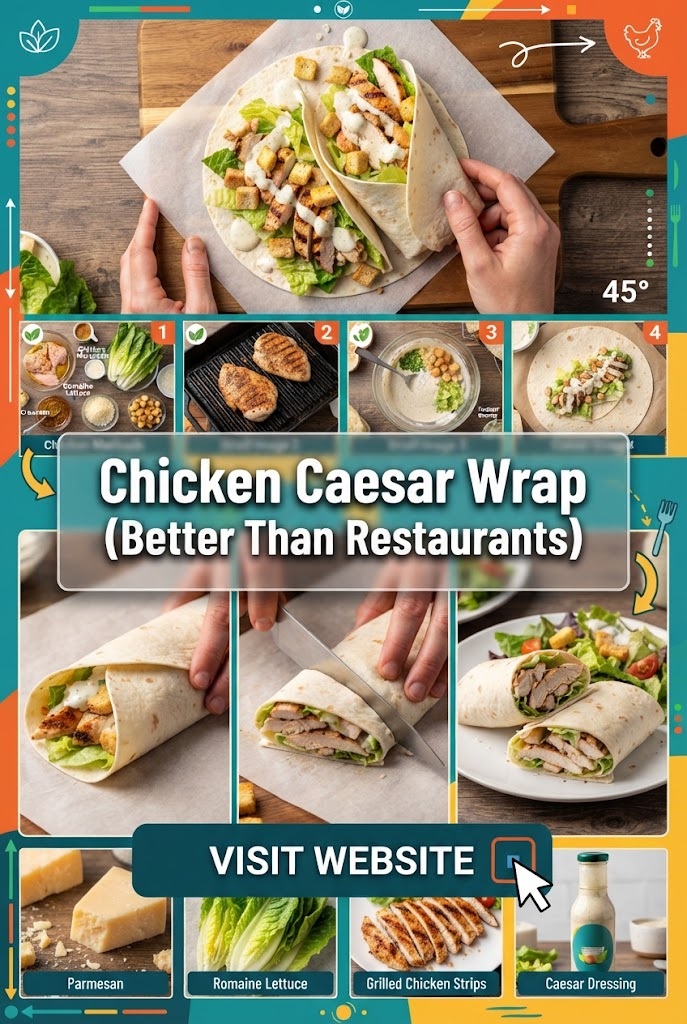
Phase 4: Assembly – The Art of the Fold
How you assemble the wrap determines if it stays together or falls apart in your lap.
- Warm the Tortilla: Place the tortilla in a dry pan for 15 seconds per side or microwave it for 10 seconds. A warm tortilla is more pliable and less likely to crack.
- The Toss: In a large bowl, toss the romaine, sliced chicken, croutons, and shaved Parmesan with the dressing. Ensure every leaf is lightly coated.
- Placement: Place a generous mound of the mixture in the center of the tortilla, slightly toward the bottom. Leave about 2 inches of space on the sides.
- The Tuck and Roll:
- Fold the sides of the tortilla inward over the filling.
- Pick up the bottom edge and fold it over the sides, tucking it tightly under the filling.
- Roll the entire thing forward, keeping it as tight as possible.
- The Final Sear: This is the pro secret. Place the finished wrap seam-side down in a hot, dry pan for 30 seconds. This “welds” the seam shut and adds a delightful toasted flavor to the exterior.
Why This Version is Better Than Restaurants
Customization and Freshness
Restaurants often prep their wraps hours in advance. By the time you eat it, the croutons have absorbed moisture from the dressing and the lettuce has wilted. When you make it at home, the “Delta” (the time between assembly and consumption) is minimal. The contrast between the cold, crisp lettuce and the warm, seared chicken is a sensation you rarely get in a takeout container.
The Quality of Ingredients
A restaurant’s goal is profit margin. They will use the cheapest oil, the most processed cheese, and chicken pumped with saline. At home, you control the quality. You can use organic chicken, real Parmigiano-Reggiano from Italy, and extra virgin olive oil. The difference in taste is exponential.
Perfect Proportions
Have you ever bitten into a wrap only to get a mouthful of plain tortilla? Or a glob of dressing with no chicken? By tossing the salad before putting it in the wrap, you ensure a perfect distribution of flavors. Every bite is a complete Caesar experience.
Variations to Keep Things Interesting
While the classic is hard to beat, the Chicken Caesar Wrap is a versatile canvas for experimentation.
1. The Spicy Buffalo Caesar
Add a kick by tossing your grilled chicken in buffalo sauce before adding it to the wrap. The cool, creamy Caesar dressing acts like a blue cheese or ranch dip, balancing the heat perfectly.
2. The “California” Caesar
Add sliced avocado and sun-dried tomatoes. The avocado adds a buttery texture that complements the crunch of the romaine, while the tomatoes provide a sweet, acidic pop.
3. The Low-Carb Option
If you’re watching carbs, skip the flour tortilla and use a large collard green leaf or a “low-carb” high-fiber wrap. Alternatively, turn it into a “Caesar Bowl” using the same ingredients but substituting the tortilla for a base of quinoa or farro.
4. The Protein Swap
Not a fan of chicken? This recipe works beautifully with:
- Grilled Shrimp: Marinate with lemon and old bay.
- Salmon: Flaked grilled salmon adds a rich, fatty element.
- Chickpeas: For a vegetarian twist, use roasted, spiced chickpeas for a similar crunch and protein hit.
Pro-Tips for Meal Prepping
The Chicken Caesar Wrap is the ultimate meal-prep lunch, but it requires a strategy to prevent the dreaded sogginess.
- Deconstructed Storage: Store the components separately. Keep the chopped romaine in a container with a paper towel to absorb moisture. Put the dressing in a small 2-oz container. Keep the chicken and croutons in their own sections.
- Assembly on the Go: Assemble the wrap right before you plan to eat it. It takes less than 60 seconds if the components are already prepped.
- The Foil Wrap: If you must assemble it in the morning for a lunch later that day, wrap it tightly in aluminum foil. This helps maintain the structure and prevents the tortilla from drying out in the fridge.
The Science of Flavor: Why Caesar Works
Why is the Caesar salad one of the most popular dishes in the world? It’s all about the five basic tastes:
- Salty: From the anchovies and Parmesan.
- Sour: From the lemon juice and Dijon.
- Bitter: From the Romaine and black pepper.
- Sweet: A subtle sweetness from the garlic and the balsamic notes often found in Worcestershire.
- Umami: The powerhouse savory note from the fermented anchovies and aged cheese.
The wrap adds a sixth element: Texture. The soft-yet-chewy tortilla provides a structural contrast that a bowl of salad lacks. It’s a complete sensory experience.
Common Mistakes to Avoid
- Using Too Much Dressing: You want a light coating, not a soup. If the dressing is dripping out of the wrap, you’ve used too much. The lettuce should still look like lettuce, not white sludge.
- Ignoring the Pepper: Caesar dressing lives and dies by black pepper. Use a grinder to get fresh, coarse cracks. Pre-ground pepper tastes like dust; fresh pepper has floral and spicy notes.
- Cold Tortillas: Never roll a cold tortilla. It will crack, the filling will leak, and the texture will be gummy.
- Cheap Parmesan: Avoid the stuff in the green can. It contains cellulose (wood pulp) to prevent clumping, which ruins the creamy texture of the dressing.
Health and Nutrition
Is a Chicken Caesar Wrap healthy? It can be!
- Protein: Chicken provides high-quality lean protein, essential for muscle repair and satiety.
- Vitamins: Romaine is rich in Vitamin A, Vitamin K, and folate.
- Healthy Fats: Using an olive-oil-based mayo or making your own dressing provides monounsaturated fats.
- Calorie Control: By making it at home, you can control the amount of cheese and dressing, which are the primary sources of calories in a restaurant wrap. A typical restaurant wrap can exceed 1,000 calories; a homemade version usually clocks in between 500 and 700 calories without sacrificing flavor.
Frequently Asked Questions
Can I make this vegan? Yes! Use a vegan mayo base, substitute the anchovies with minced capers or a splash of soy sauce for umami, and use nutritional yeast or a vegan Parmesan alternative. For the “chicken,” use seasoned soy curls or roasted chickpeas.
What tortilla is best? Flour tortillas are the standard because they are the most flexible. Whole wheat tortillas add a nutty flavor and more fiber, but they can be more prone to tearing, so ensure they are well-warmed before rolling.
How long does the dressing last? If using a mayonnaise base, the dressing will stay fresh in the refrigerator for up to 5 days. If using raw egg yolks, it is best consumed within 2 days.
How do I prevent the wrap from falling apart? The “sear” at the end is the most effective method. Additionally, don’t overstuff. It’s tempting to put a pound of chicken in there, but a manageable wrap is a better eating experience than an exploded one.
Conclusion: Elevate Your Lunch Game
The Chicken Caesar Wrap is more than just a convenient lunch; it’s a masterpiece of culinary balance. When you take the time to grill the chicken properly, whisk together a dressing from scratch, and treat your greens with respect, the result is a meal that feels like a luxury.
Stop settling for the soggy, overpriced wraps from the deli down the street. With a few key techniques and high-quality ingredients, you can create a Chicken Caesar Wrap that is objectively better than what you’ll find in almost any restaurant. It’s fresh, it’s crunchy, it’s savory, and most importantly, it’s exactly how you want it.
Master the tuck-and-roll, find your favorite anchovy-to-garlic ratio, and reclaim the glory of the Caesar Wrap. Your taste buds—and your lunch hour—will thank you.
Summary Checklist for Success:
- Chicken: Marinated and rested.
- Dressing: Anchovies and fresh lemon included.
- Lettuce: Dry, crisp Romaine hearts.
- Cheese: Real Parmigiano-Reggiano.
- Croutons: Crushed for even distribution.
- Tortilla: Warmed and seared seam-side down.
By following this comprehensive guide, you are well on your way to becoming a wrap legend in your own kitchen. Whether you’re feeding a family or prepping for a busy work week, the “Better Than Restaurants” Chicken Caesar Wrap is a recipe that never goes out of style.
The History of the Caesar: A Quick Bite
To truly appreciate the wrap, we must pay homage to its origins. The Caesar Salad wasn’t invented by Julius Caesar, but rather by Caesar Cardini, an Italian immigrant who operated restaurants in Mexico and the United States. As the story goes, on a busy Fourth of July in 1924 at his Tijuana restaurant, Cardini ran low on kitchen supplies. He threw together what he had left—romaine, garlic, croutons, Parmesan, boiled eggs, olive oil, and Worcestershire sauce—and prepared it tableside with a flair of showmanship.
The salad became a sensation, eventually making its way to Hollywood and beyond. It wasn’t until the late 20th century, with the rise of “fusion” cuisine and the need for portable food, that someone had the brilliant idea to tuck this iconic salad into a flour tortilla. Today, we continue that tradition of innovation by refining the ingredients and techniques to ensure that this classic remains a favorite for generations to come.
Pairings: What to Serve with Your Wrap
While the Chicken Caesar Wrap is a complete meal on its own, you can elevate the experience with the right side dishes:
- Sweet Potato Fries: The sweetness of the fries provides a lovely contrast to the salty, savory wrap.
- A Simple Fruit Salad: The acidity of berries or melon cleanses the palate between rich bites of dressing.
- Light Soups: A tomato basil or a clear vegetable broth soup turns the wrap into a classic “soup and sandwich” combo.
- Iced Tea or Sparkling Water: A crisp, cold beverage with a lemon wedge mirrors the citrus notes in the dressing.
Final Thought on Texture
Remember, the secret to the world’s best wrap is the “Crunch-to-Cream” ratio. If your wrap feels too soft, add more croutons or a few more leaves of romaine. If it feels too dry, add a teaspoon more dressing. Cooking is an art, but it’s also about personal preference. Use this guide as your foundation, but don’t be afraid to tweak the variables until you find your perfect version.
Now, go forth and wrap. The ultimate lunch awaits.