Chicken and Tarragon Skillet
Chicken and Tarragon Skillet
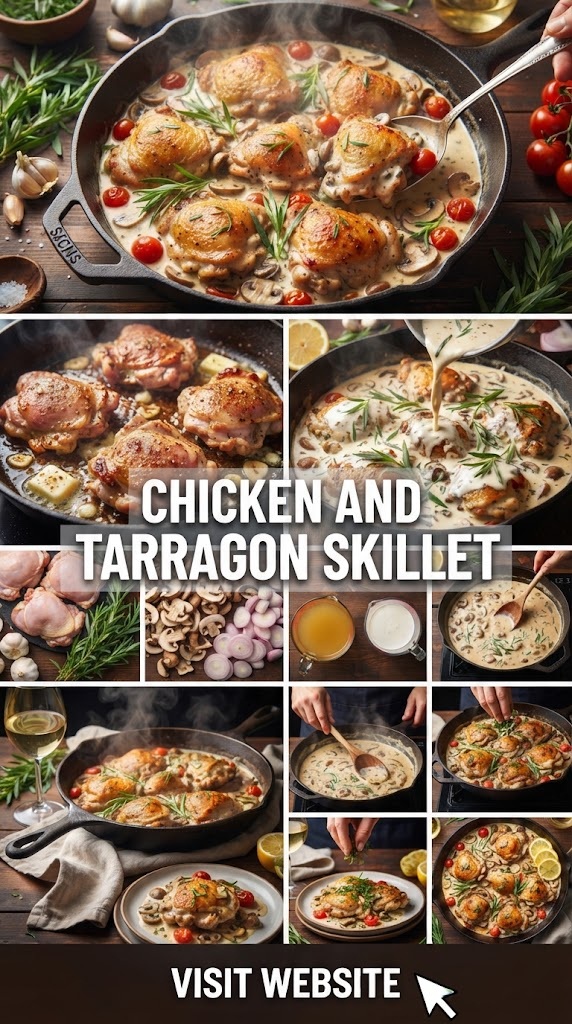
Chicken and Tarragon Skillet is a comforting, flavorful one-pan dinner that combines tender chicken, aromatic fresh tarragon, garlic, onions, and a creamy pan sauce. Tarragon has a delicate herbal flavor with subtle notes of anise and pepper, making it an excellent match for chicken. The entire meal comes together in one skillet, which means less cleanup and plenty of flavor from the browned chicken and savory sauce.
This recipe is ideal for busy weeknights, but it is also elegant enough for a relaxed weekend dinner. Serve it with mashed potatoes, rice, pasta, roasted vegetables, or crusty bread so you can enjoy every drop of the creamy tarragon sauce.
Why You’ll Love This Chicken and Tarragon Skillet
There are plenty of reasons to add this recipe to your regular dinner rotation.
One-Skillet Convenience
Everything cooks in one skillet. The chicken is browned first, then the sauce is prepared in the same pan. Those browned bits left behind by the chicken become an important part of the sauce’s flavor.
Rich but Balanced Flavor
The creamy sauce is rich without being overly heavy. Fresh tarragon gives the dish a distinctive herbal character, while garlic, onion, Dijon mustard, and lemon juice add savory and bright notes.
Tender Chicken
Chicken breasts can sometimes become dry when cooked too long. This recipe uses a quick searing method followed by gentle cooking in the sauce to help keep the chicken tender and juicy.
Perfect for Weeknights
The ingredients are straightforward, preparation is simple, and cleanup is minimal. You can have a restaurant-style chicken dinner on the table without spending hours in the kitchen.
Easy to Customize
You can add mushrooms, spinach, peas, sun-dried tomatoes, or other vegetables. You can also use chicken thighs instead of chicken breasts.
Complete Recipe
Recipe Information
Recipe Name: Chicken and Tarragon Skillet
Cuisine: American/French-inspired
Course: Main Course
Preparation Time: 15 minutes
Cooking Time: 25–30 minutes
Total Time: About 45 minutes
Servings: 4
Difficulty: Easy to Moderate
Ingredients
For the Chicken
- 4 boneless, skinless chicken breasts, about 6 ounces each
- 1 teaspoon kosher salt
- ½ teaspoon freshly ground black pepper
- ½ teaspoon paprika
- ½ teaspoon garlic powder
- 2 tablespoons olive oil
- 1 tablespoon unsalted butter
For the Tarragon Sauce
- 1 small yellow onion, finely chopped
- 3 cloves garlic, minced
- 1 tablespoon all-purpose flour
- 1 cup low-sodium chicken broth
- ¾ cup heavy cream
- 1 tablespoon Dijon mustard
- 1 tablespoon fresh lemon juice
- 2 tablespoons fresh tarragon, finely chopped
- 1 teaspoon dried tarragon, optional
- ½ teaspoon salt, or to taste
- ¼ teaspoon black pepper
- 1 tablespoon unsalted butter
Optional Garnishes
- Fresh tarragon leaves
- Fresh parsley
- Lemon wedges
- Freshly cracked black pepper
- A small sprinkle of Parmesan cheese
Ingredient Notes
Chicken
Boneless, skinless chicken breasts are convenient and lean. For the most evenly cooked chicken, choose pieces that are similar in thickness.
If your chicken breasts are very thick, slice them horizontally into cutlets or gently pound them to an even thickness.
Chicken thighs are another excellent option. They contain more fat than chicken breasts and are naturally juicy.
Tarragon
Fresh tarragon is the star ingredient. It has a distinctive flavor that is slightly sweet, herbal, and reminiscent of anise or licorice.
Fresh tarragon gives the best flavor, but dried tarragon can be used when fresh isn’t available. Because dried herbs are more concentrated, use less.
Heavy Cream
Heavy cream creates a smooth and luxurious sauce. You can substitute half-and-half for a lighter sauce, although the finished sauce may be slightly thinner.
Dijon Mustard
Dijon mustard adds subtle sharpness and depth. It doesn’t make the sauce taste strongly of mustard; instead, it helps balance the cream and chicken.
Chicken Broth
Low-sodium chicken broth allows you to control the salt level more easily.
Lemon Juice
A small amount of fresh lemon juice helps cut through the richness of the cream and brings the whole sauce together.
Equipment Needed
You don’t need much equipment for this recipe.
- Large skillet
- Wooden spoon or spatula
- Chef’s knife
- Cutting board
- Measuring spoons
- Measuring cups
- Meat thermometer
- Small bowl for seasoning
A heavy-bottomed skillet, such as cast iron or stainless steel, works especially well because it holds heat evenly and encourages good browning.
How to Prepare the Chicken
Before cooking, pat the chicken breasts dry with paper towels.
This step is easy to overlook, but it makes a big difference. Excess moisture can prevent the chicken from developing a golden-brown crust.
If the chicken breasts are thick, gently pound them to an even thickness.
Season both sides with:
- Salt
- Black pepper
- Paprika
- Garlic powder
Press the seasoning gently into the chicken so it adheres to the surface.
Let the seasoned chicken rest for about 5 minutes while you prepare the other ingredients.
Step-by-Step Instructions
Step 1: Prepare the Ingredients
Before turning on the stove, chop the onion, mince the garlic, and chop the fresh tarragon.
Measure the chicken broth, heavy cream, Dijon mustard, and lemon juice.
Cooking moves quickly once the skillet is hot, so having everything prepared ahead of time makes the process easier.
Step 2: Heat the Skillet
Place a large skillet over medium-high heat.
Add the olive oil and allow it to heat for about 30–60 seconds.
The oil should look slightly shimmering but should not be smoking heavily.
Add the butter.
The combination of olive oil and butter provides flavor while helping prevent the butter from burning too quickly.
Step 3: Sear the Chicken
Carefully place the chicken breasts into the hot skillet.
Don’t overcrowd the pan. If your skillet isn’t large enough for all four pieces, cook them in batches.
Sear the chicken for approximately 4–5 minutes on the first side.
Don’t move the chicken constantly.
Allowing it to remain in contact with the hot skillet helps create a golden-brown crust.
Flip the chicken and cook the second side for another 3–4 minutes.
The chicken does not need to be fully cooked at this stage.
Transfer the browned chicken to a clean plate.
Step 4: Cook the Onion
Reduce the heat to medium.
Add the chopped onion to the same skillet.
If the pan looks dry, add another small drizzle of olive oil.
Cook the onion for approximately 3–4 minutes.
Stir occasionally.
The onion should become soft and translucent.
As it cooks, use a wooden spoon to scrape the browned bits from the bottom of the pan.
Those browned bits contain concentrated chicken flavor and will become part of your sauce.
Step 5: Add the Garlic
Add the minced garlic.
Cook for approximately 30–60 seconds.
Be careful not to burn the garlic.
Burned garlic can become bitter and overpower the delicate flavor of the tarragon.
Step 6: Add the Flour
Sprinkle the flour over the onion and garlic.
Stir continuously for about 1 minute.
The flour will coat the vegetables and help thicken the sauce.
Cooking the flour briefly also removes its raw taste.
Step 7: Add the Chicken Broth
Slowly pour the chicken broth into the skillet while stirring.
Continue stirring until the flour is incorporated and the sauce begins to smooth out.
Scrape the bottom of the skillet as you stir.
This helps dissolve the flavorful browned bits.
Allow the broth to simmer for about 2 minutes.
Step 8: Add the Cream
Reduce the heat to medium-low.
Slowly add the heavy cream.
Stir gently until the cream combines with the broth.
The sauce should begin to look creamy and smooth.
Avoid boiling the sauce aggressively. Gentle simmering is ideal.
Step 9: Add Dijon Mustard
Stir in the Dijon mustard.
Taste the sauce after it has simmered briefly.
The mustard should provide a subtle savory sharpness without overpowering the tarragon.
Step 10: Add Tarragon
Add the chopped fresh tarragon.
Reserve a small amount for garnishing later.
Fresh tarragon is best added toward the end because its delicate aroma can diminish with prolonged cooking.
Stir the tarragon into the sauce.
Step 11: Return the Chicken to the Skillet
Place the browned chicken breasts back into the skillet.
Spoon some of the sauce over the chicken.
Reduce the heat to low.
Cover the skillet loosely with a lid and allow the chicken to simmer gently for approximately 7–10 minutes, depending on thickness.
The exact cooking time will vary according to the size of the chicken pieces.
Step 12: Check the Chicken Temperature
The safest way to determine whether chicken is cooked is to use an instant-read thermometer.
Insert the thermometer into the thickest part of the chicken.
The chicken should reach an internal temperature of 165°F (74°C).
Avoid relying solely on cooking time because chicken breasts can vary significantly in size.
Step 13: Finish the Sauce
Once the chicken is cooked, remove the skillet from the heat.
Stir in the fresh lemon juice.
Add the remaining tablespoon of butter and gently stir until melted.
Taste the sauce.
Adjust the seasoning with additional salt, pepper, lemon juice, or tarragon as needed.
Step 14: Garnish and Serve
Sprinkle the chicken with fresh tarragon and parsley if desired.
Add a little freshly cracked black pepper.
Serve immediately with your favorite side dishes.
For an especially beautiful presentation, spoon some sauce onto each plate before placing the chicken on top.
Finish with additional sauce and a small sprig of fresh tarragon.
What the Finished Dish Should Look Like
A properly prepared Chicken and Tarragon Skillet should have golden-brown chicken surrounded by a smooth, creamy sauce.
The sauce should be thick enough to coat the back of a spoon but still loose enough to pour over the chicken and side dishes.
The chicken should be juicy and tender rather than dry.
You should notice the savory flavor of the chicken first, followed by creamy richness, subtle mustard, garlic, lemon, and the distinctive herbal character of tarragon.
How to Get Perfectly Browned Chicken
Good browning is one of the secrets to this recipe.
Pat the Chicken Dry
Moisture prevents browning. Always pat the chicken dry before seasoning.
Preheat the Skillet
A cold skillet can cause the chicken to simmer rather than sear.
Don’t Overcrowd
Too many chicken pieces release moisture and lower the temperature.
Don’t Constantly Flip
Let the chicken stay in contact with the skillet long enough to develop a crust.
Use Medium-High Heat
You want enough heat to brown the chicken but not so much that the exterior burns before the inside cooks.
How to Keep Chicken Breasts Juicy
Chicken breasts are lean, so they require careful cooking.
First, make sure they are relatively even in thickness.
Second, don’t cook them aggressively from start to finish.
The initial sear develops flavor, while the gentle simmer in the sauce finishes the cooking.
Most importantly, use a thermometer.
Remove the chicken from the heat once it reaches the safe internal temperature of 165°F (74°C).
How to Make the Tarragon Sauce Extra Flavorful
The sauce is just as important as the chicken.
Start with the browned bits left in the skillet.
Then build flavor in layers:
- Cook the onion.
- Add garlic.
- Toast the flour briefly.
- Deglaze with chicken broth.
- Add cream.
- Stir in Dijon mustard.
- Add fresh tarragon.
- Finish with lemon juice and butter.
Each ingredient contributes something different.
The broth adds savory depth, cream adds richness, mustard adds complexity, tarragon provides the signature herbal flavor, and lemon keeps everything balanced.
Variations
Chicken and Mushroom Tarragon Skillet
Add 8 ounces of sliced mushrooms after cooking the onion.
Cook until the mushrooms are golden and most of their moisture has evaporated.
Continue with the recipe as written.
Mushrooms pair exceptionally well with both chicken and tarragon.
Spinach Tarragon Chicken
Add 2–3 cups of fresh baby spinach during the final few minutes.
Stir until the spinach wilts.
This adds color and an easy vegetable component.
Tarragon Chicken with Peas
Add 1 cup of frozen peas during the final 3–4 minutes of cooking.
The peas add sweetness and a bright green color.
Chicken Thigh Version
Replace the chicken breasts with boneless, skinless chicken thighs.
Chicken thighs generally require slightly longer cooking and remain juicy because they contain more fat.
Lighter Version
Use half-and-half instead of heavy cream.
You can also reduce the amount of butter.
The sauce will be lighter and somewhat less thick.
Extra-Lemony Version
For a brighter flavor, increase the lemon juice slightly and add a little fresh lemon zest.
Be careful not to add too much lemon because excessive acidity can overpower the creamy sauce.
What to Serve with Chicken and Tarragon Skillet
This chicken is extremely versatile.
Mashed Potatoes
Creamy mashed potatoes are one of the best choices because they absorb the tarragon sauce.
Rice
Steamed white rice, brown rice, or basmati rice works well.
Pasta
Serve the chicken and sauce over egg noodles, fettuccine, linguine, or penne.
Crusty Bread
A warm piece of crusty bread is perfect for soaking up the sauce.
Roasted Vegetables
Try:
- Broccoli
- Carrots
- Green beans
- Asparagus
- Brussels sprouts
- Zucchini
Simple Green Salad
A crisp salad with a light lemon vinaigrette provides freshness and balances the creamy chicken.
Meal Prep Instructions
Chicken and Tarragon Skillet can be prepared ahead of time.
Cook the chicken and sauce according to the recipe.
Allow the leftovers to cool before transferring them to airtight containers.
Store in the refrigerator for up to 3–4 days.
For the best texture, store the chicken with plenty of sauce.
How to Reheat
Reheat the chicken gently in a skillet over low to medium-low heat.
Add a small splash of chicken broth or cream if the sauce has thickened too much.
Cover the skillet and heat until the chicken is warmed through.
Avoid very high heat because creamy sauces can separate and chicken can become dry.
You can also reheat individual portions in the microwave.
Use short intervals and stir the sauce between heating periods.
Can You Freeze Chicken and Tarragon Skillet?
You can freeze the chicken, but creamy sauces may change texture slightly after freezing and thawing.
If you plan to freeze the meal, allow it to cool completely and place it in an airtight freezer-safe container.
Freeze for up to approximately 2 months for best quality.
Thaw overnight in the refrigerator.
Reheat slowly over low heat.
If the sauce looks separated, whisk in a small amount of cream or chicken broth while reheating.
Common Mistakes to Avoid
Overcooking the Chicken
This is the most common problem.
Use a thermometer rather than relying only on time.
Burning the Garlic
Garlic only needs a short amount of cooking time.
Add it after the onion has softened.
Boiling the Cream Sauce
A rapid boil can cause dairy-based sauces to separate.
Keep the sauce at a gentle simmer.
Using Too Much Tarragon
Tarragon has a strong and distinctive flavor.
Start with the recommended amount and add more at the end if necessary.
Skipping the Lemon
Even though only a small amount is needed, lemon juice helps balance the cream and butter.
Not Scraping the Pan
Those browned pieces left behind after searing the chicken are full of flavor.
Use the broth to loosen them from the skillet.
Frequently Asked Questions
Can I use dried tarragon?
Yes. Fresh tarragon is preferred, but dried tarragon works well.
Use approximately 1 teaspoon of dried tarragon in place of 1 tablespoon of fresh tarragon, then adjust according to taste.
Can I use chicken thighs?
Absolutely.
Boneless, skinless chicken thighs are especially good for this recipe because they remain tender and juicy.
Can I make this recipe without cream?
Yes.
You can make a lighter sauce using additional chicken broth and a small amount of half-and-half.
However, the finished sauce will not be as rich.
Can I add mushrooms?
Yes.
Mushrooms are one of the best additions to creamy tarragon chicken.
Cook them until golden before adding the broth.
Is fresh tarragon better than dried?
Fresh tarragon generally provides a brighter aroma and more delicate flavor.
Dried tarragon is a useful substitute when fresh herbs aren’t available.
Can I use chicken stock instead of broth?
Yes.
Chicken stock works perfectly.
If your stock is heavily salted, reduce the additional salt in the recipe.
Why is my sauce too thin?
Allow it to simmer uncovered for a few additional minutes.
If necessary, mix a small amount of flour with cold water to create a smooth slurry and add it gradually.
Avoid adding dry flour directly to the finished sauce because it can create lumps.
Why is my sauce too thick?
Add a small splash of chicken broth, milk, or cream and stir gently over low heat.
Nutrition Information
Approximate nutrition per serving will vary depending on the size of the chicken breasts and the exact ingredients used.
A serving generally provides:
- Protein from chicken
- Fat from cream, butter, and olive oil
- Carbohydrates from the small amount of flour
- Calcium and other nutrients from dairy
- Antioxidants and flavor compounds from herbs and garlic
For precise nutritional information, calculate the recipe using the specific brands and quantities you use.
Expert Tips for the Best Chicken and Tarragon Skillet
1. Use Fresh Herbs When Possible
Fresh tarragon makes the dish taste brighter and more aromatic.
2. Don’t Rush the Searing
A good golden crust provides much of the dish’s flavor.
3. Deglaze the Pan Properly
When you add the chicken broth, scrape the skillet thoroughly.
4. Keep the Sauce Gentle
Cream sauces prefer low to medium-low heat.
5. Taste Before Serving
Seasoning should be adjusted at the end because broth, mustard, and butter can all contribute different amounts of salt.
6. Add Lemon at the End
Fresh lemon juice tastes brighter when added after cooking rather than simmered for a long period.
7. Garnish with Fresh Tarragon
A final sprinkle of fresh herbs makes the flavor and presentation noticeably better.
Complete Cooking Timeline
For an organized dinner, follow this timeline:
0:00–0:05
Prepare chicken and seasonings.
0:05–0:10
Heat skillet and sear chicken.
0:10–0:15
Remove chicken and cook onion.
0:15–0:17
Add garlic and flour.
0:17–0:20
Add chicken broth and scrape the skillet.
0:20–0:23
Add cream, Dijon mustard, and tarragon.
0:23–0:32
Return chicken and gently simmer.
0:32–0:35
Check internal temperature and finish sauce.
0:35–0:40
Rest briefly, garnish, and serve.
Serving Presentation Ideas
For a dinner-party presentation, place a spoonful of sauce in the center of each plate.
Slice the chicken diagonally and arrange it over the sauce.
Spoon additional tarragon cream sauce over the chicken.
Add fresh tarragon leaves and freshly cracked black pepper.
Serve roasted vegetables or mashed potatoes alongside the chicken.
For a casual family dinner, simply place the skillet directly on the table with a serving spoon.
The rustic skillet presentation makes the meal feel warm and inviting.
Why Tarragon and Chicken Work So Well Together
Tarragon is particularly compatible with chicken because its aromatic, slightly sweet flavor complements the mild taste of poultry.
The herb can make a simple chicken dish taste more sophisticated without requiring a long ingredient list.
Cream softens the herbal flavor, Dijon mustard adds depth, and lemon provides acidity.
The result is a sauce that is creamy, savory, fresh, and aromatic.
This balance is what makes Chicken and Tarragon Skillet feel both comforting and elegant.
Final Recipe Card
Chicken and Tarragon Skillet
Prep Time: 15 minutes
Cook Time: 25–30 minutes
Total Time: About 45 minutes
Servings: 4
Ingredients
- 4 boneless, skinless chicken breasts
- 1 teaspoon salt
- ½ teaspoon black pepper
- ½ teaspoon paprika
- ½ teaspoon garlic powder
- 2 tablespoons olive oil
- 2 tablespoons butter, divided
- 1 small yellow onion, chopped
- 3 cloves garlic, minced
- 1 tablespoon all-purpose flour
- 1 cup chicken broth
- ¾ cup heavy cream
- 1 tablespoon Dijon mustard
- 2 tablespoons fresh tarragon, chopped
- 1 tablespoon fresh lemon juice
- Fresh tarragon or parsley for garnish
Directions
- Pat the chicken dry and season both sides with salt, pepper, paprika, and garlic powder.
- Heat olive oil in a large skillet over medium-high heat.
- Add 1 tablespoon butter.
- Sear chicken for 4–5 minutes on the first side and 3–4 minutes on the second side.
- Transfer chicken to a plate.
- Reduce heat to medium and cook the onion for 3–4 minutes.
- Add garlic and cook for about 30–60 seconds.
- Sprinkle in flour and stir for 1 minute.
- Slowly add chicken broth while stirring and scraping the skillet.
- Add heavy cream and Dijon mustard.
- Stir in fresh tarragon.
- Return chicken to the skillet.
- Reduce heat to low and gently simmer until the chicken reaches 165°F (74°C).
- Remove from heat.
- Stir in lemon juice and remaining butter.
- Taste and adjust seasoning.
- Garnish with fresh tarragon and serve immediately.
Final Thoughts
Chicken and Tarragon Skillet is a wonderful example of how a handful of simple ingredients can create an impressive dinner. The golden-brown chicken provides a savory foundation, while the creamy tarragon sauce brings everything together with garlic, Dijon mustard, lemon, and fresh herbs.
The recipe is flexible enough for a busy weeknight and elegant enough for entertaining. Serve it with mashed potatoes for a comforting meal, rice for an easy dinner, pasta for something extra satisfying, or roasted vegetables for a balanced plate.
The most important techniques are simple: dry the chicken before searing, don’t overcrowd the skillet, scrape up the browned bits, simmer the cream sauce gently, and use a thermometer to make sure the chicken reaches 165°F (74°C).
Once you’ve made this recipe, you’ll have an easy one-pan chicken dinner that can be customized in countless ways. Add mushrooms for earthiness, spinach for color, peas for sweetness, or extra lemon for brightness. However you serve it, the combination of tender chicken and fragrant tarragon cream sauce makes this skillet meal a flavorful addition to any dinner table.