Chicken and Egg Drop Soup (Asian)
In the pantheon of comfort foods, few dishes command as much universal love as Chicken and Egg Drop Soup. Known in Mandarin as dànhuātāng (蛋花湯), which literally translates to “egg flower soup,” this golden, velvety elixir is a staple of Chinese-American cuisine and a cornerstone of traditional home cooking across East Asia. Whether you are battling a seasonal cold, seeking a light yet protein-packed lunch, or looking for the perfect starter for a multi-course dinner, Chicken and Egg Drop Soup delivers a symphony of textures and subtle, savory flavors.
This comprehensive guide will take you on a journey through the history, science, and culinary techniques required to create a restaurant-quality bowl of Chicken and Egg Drop Soup in your own kitchen. We will explore the secrets of the “egg ribbon,” the importance of “velveting” chicken, and the nutritional benefits that make this soup a global favorite.
The Cultural Heritage of Egg Drop Soup
To understand the beauty of Chicken and Egg Drop Soup, one must first look at its origins. While many Americans associate it with the red-and-white takeout containers of their local Chinese restaurant, the dish has deep roots in Cantonese and Northern Chinese culinary traditions.
Historically, egg-based soups were a way to stretch expensive ingredients. A single egg, when drizzled into a large pot of boiling broth, could provide protein and visual appeal for an entire family. As the recipe traveled across the ocean with Chinese immigrants in the late 19th and early 20th centuries, it adapted to Western tastes. The addition of tender chicken breast made the soup more substantial, transforming it from a light palate cleanser into a hearty, comforting meal.
Today, it stands as a testament to the “less is more” philosophy of cooking. With just a handful of ingredients—chicken, eggs, broth, and seasonings—you can create a dish that is far greater than the sum of its parts.
The Anatomy of the Perfect Chicken and Egg Drop Soup
What separates a mediocre soup from a masterpiece? It comes down to three pillars: the clarity and depth of the broth, the tenderness of the chicken, and the delicate “blossom” of the egg ribbons.
1. The Broth: The Foundation of Flavor
Most commercial versions of egg drop soup use a standard chicken base, often dyed a bright yellow with food coloring or turmeric. However, a truly exceptional soup starts with a high-quality, collagen-rich broth. If you have the time, making a homemade stock using chicken carcasses, ginger, scallions, and a splash of Shaoxing wine will provide a depth of flavor that store-bought cartons simply cannot match.
2. The “Egg Flower” Technique
The hallmark of this soup is the thin, wispy ribbons of egg that float effortlessly in the liquid. Achieving this requires a specific scientific understanding of protein coagulation. If the broth is too cold, the egg sinks and clumps. If the broth is at a rolling boil, the egg breaks into tiny, grainy bits. The “sweet spot” is a gentle simmer combined with a controlled pouring technique.
3. Velveting the Chicken
In Chinese stir-fries and soups, chicken is often incredibly tender, almost silky in texture. This is achieved through a technique called “velveting.” By marinating the chicken in a small amount of cornstarch and liquid (water, oil, or egg white) before cooking, you create a protective barrier that prevents the fibers from toughening when they hit the hot soup.
Essential Ingredients and Their Roles
Before we dive into the cooking process, let’s break down the essential components you will need for an authentic experience.
- Chicken Broth/Stock: Use a low-sodium version so you can control the salt levels.
- Eggs: Fresh, room-temperature eggs whisked thoroughly.
- Chicken Breast: Sliced into paper-thin pieces or small bite-sized cubes.
- Cornstarch Slurry: A mixture of cornstarch and cold water is the key to the soup’s signature “glossy” consistency. It holds the eggs in suspension so they don’t sink to the bottom.
- Aromatics: Fresh ginger and garlic provide a subtle heat and medicinal aroma.
- White Pepper: Unlike black pepper, white pepper offers a sharp, floral heat without speckling the beautiful golden broth.
- Sesame Oil: Added at the very end to preserve its delicate, nutty fragrance.
- Turmeric or Saffron (Optional): Just a pinch for that iconic restaurant-style golden hue.
- Scallions: For a fresh, green crunch.
The Masterclass: Step-by-Step Chicken and Egg Drop Soup
This recipe focuses on the “Restaurant Style” which is slightly thicker and richer than the rustic home style.
Step 1: Preparing the Chicken (The Velveting Phase)
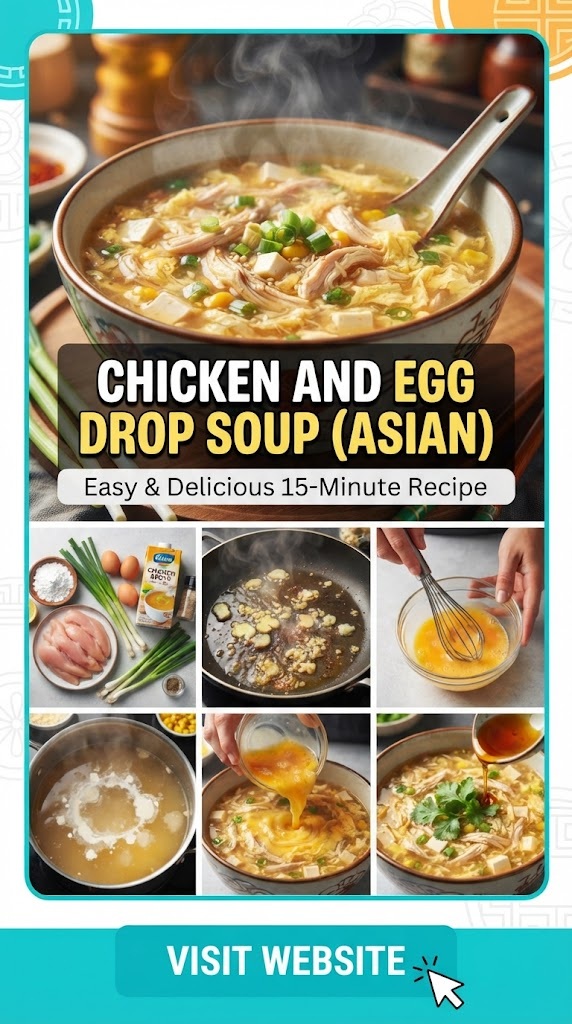
Thinly slice 1/2 pound of chicken breast against the grain. In a small bowl, toss the chicken with 1 teaspoon of cornstarch, 1 teaspoon of soy sauce, and a half-teaspoon of sesame oil. Let this sit for at least 15 minutes. This ensures the chicken remains moist and tender even in the simmering broth.
Step 2: Infusing the Broth
In a large pot, bring 6 cups of high-quality chicken broth to a boil. Add a 1-inch piece of smashed ginger and 2 cloves of smashed garlic. Let them simmer for 5-10 minutes to infuse the liquid, then remove them with a slotted spoon. This gives you a clean broth with a complex aroma.
Step 3: Thickening the Base
Turn the heat down to medium. Whisk together 2 tablespoons of cornstarch with 3 tablespoons of cold water to create a slurry. Slowly pour the slurry into the simmering broth while stirring constantly. The soup will go from watery to slightly viscous and translucent. This step is critical; without the cornstarch, the eggs will not form ribbons.
Step 4: Poaching the Chicken
Add your marinated chicken pieces to the thickened broth. Since they are sliced thin, they will cook very quickly—usually within 2 to 3 minutes. Do not overcook them, or they will lose their “velvet” quality.
Step 5: The “Egg Drop” (The Moment of Truth)
This is the most important part. Beat 3 large eggs in a bowl with a pinch of salt. Turn the heat to low so the soup is barely simmering. Use a ladle to create a gentle “whirlpool” in the pot, stirring in one direction. Slowly drizzle the beaten eggs in a very thin stream into the moving water. Some chefs like to pour the egg over the tines of a fork or through a pair of chopsticks to break the stream. Crucial Tip: Let the eggs sit undisturbed for 15 seconds after pouring before gently stirring. This allows the ribbons to set.
Step 6: The Finishing Touches
Season with 1/2 teaspoon of white pepper and salt to taste. Turn off the heat and stir in 1 teaspoon of toasted sesame oil and a handful of chopped green scallions. Serve immediately.
The Science of the Slurry: Why Thickness Matters
Many beginners skip the cornstarch or use too little, resulting in a soup where the eggs clump at the bottom. In culinary science, the cornstarch slurry acts as a stabilizer. By increasing the viscosity of the broth, you increase the “drag” on the egg as it falls through the liquid. This slower descent, combined with the heat, allows the egg to cook into a long, flat ribbon rather than a heavy ball.
Furthermore, the cornstarch creates a “silky” mouthfeel that is characteristic of Cantonese cuisine. It coats the tongue and allows the flavors of the ginger and chicken to linger longer.
Variations: Taking Your Soup to the Next Level
Once you have mastered the basic recipe, you can experiment with various regional and modern adaptations.
1. The Spicy Szechuan Twist
Add a tablespoon of chili oil and a teaspoon of Szechuan peppercorns to the base broth. This transforms the comforting classic into a fiery, numbing experience that clears the sinuses.
2. The Loaded Vegetable Version
To make this a one-pot meal, add sweet corn kernels, peas, or sliced shiitake mushrooms. The sweetness of the corn pairs exceptionally well with the savory chicken broth.
3. Keto-Friendly Egg Drop Soup
If you are following a low-carb diet, you can omit the cornstarch. To help the eggs bloom without the thickener, ensure the broth is at a very high simmer and whisk the eggs more vigorously. The ribbons will be smaller and more “shredded,” but the flavor remains identical. Use Xanthan gum as a thickener if you still desire that viscous texture.
4. West Lake Style (Xihǔ Niúròu Geng)
While traditionally made with beef, you can adapt the West Lake style by adding finely minced cilantro and a splash of black vinegar. This provides a bright, acidic contrast to the rich eggs.
Troubleshooting Common Mistakes
- Rubbery Eggs: This happens if the broth is boiling too violently. The high heat toughens the egg proteins instantly. Always drop the heat to a low simmer before adding the eggs.
- Cloudy Broth: If you stir the eggs too quickly or too much, you will break the ribbons into tiny particles, making the soup look murky. Patience is key—let the ribbons set!
- Bland Flavor: This soup relies on high-quality broth. If your broth is weak, the soup will be weak. Don’t be afraid to add a splash of soy sauce or a pinch of MSG (Monosodium Glutamate) for that classic “umami” punch found in restaurants.
- Tough Chicken: If your chicken is dry, it’s likely you skipped the velveting step or sliced the chicken too thick. Always slice against the grain to break up the tough muscle fibers.
Nutritional Benefits: More Than Just Comfort
Chicken and Egg Drop Soup isn’t just delicious; it’s a nutritional powerhouse.
- High Protein, Low Calorie: A standard bowl contains roughly 150-200 calories but packs a significant protein punch from both the chicken and the eggs.
- Hydration and Electrolytes: The broth provides essential fluids and salts, making it an excellent choice for those recovering from illness or dehydration.
- Ginger’s Medicinal Properties: The inclusion of fresh ginger provides anti-inflammatory benefits and can help soothe upset stomachs and nausea.
- Easily Digestible: Because the ingredients are poached and the proteins are broken down (velveted), it is very gentle on the digestive system.
Pairing Suggestions: What to Serve with Your Soup
In a traditional Chinese setting, soup is often served throughout the meal rather than just as an appetizer. However, if you are building a menu, consider these pairings:
- Appetizers: Pair with crispy vegetable spring rolls or pan-fried pork potstickers. The crunch of the fried appetizers balances the silkiness of the soup.
- Main Course: Serve alongside a plate of Beef and Broccoli or Yang Chow Fried Rice. The light nature of the soup cuts through the richness of stir-fried dishes.
- Garnish: Don’t forget the crispy wonton strips! Adding a handful of fried wonton skins to the top of your bowl adds a delightful textural contrast.
The Evolution of Chinese-American Comfort
The story of Chicken and Egg Drop Soup is a story of adaptation. In the United States, this dish became a symbol of the “safe” and “approachable” side of Chinese cuisine during the mid-20th century. It helped bridge the gap between different cultures, offering a flavor profile that was familiar yet exotic.
For many American families, the first taste of “Asian food” was a spoonful of this golden soup. Its enduring popularity in 2024 is a testament to its timelessness. In an era of complex molecular gastronomy and fast-paced food trends, there is something deeply grounding about a simple bowl of hot broth and eggs.
Storage and Reheating Tips
While Chicken and Egg Drop Soup is best enjoyed fresh, you can store leftovers in an airtight container in the refrigerator for up to 3 days.
- Reheating: Do not microwave on high heat, as this can cause the eggs to become rubbery. Instead, reheat slowly in a saucepan over medium-low heat.
- Freezing: It is generally not recommended to freeze this soup. The cornstarch-thickened broth can become watery and lose its texture upon thawing, and the eggs may change consistency.
Conclusion: A Ritual of the Kitchen
Mastering Chicken and Egg Drop Soup is more than just learning a recipe; it is about learning the rhythm of the kitchen. It’s about the patience of waiting for the broth to infuse, the precision of the cornstarch slurry, and the delicate “dance” of the whisk as you pour the eggs.
When you sit down with a steaming bowl of this soup, you are participating in a tradition that spans centuries and continents. You are enjoying a dish that has comforted emperors and immigrants alike. So, grab your whisk, slice your chicken thin, and prepare to create a masterpiece of Chinese-American comfort.
Whether you’re making it for yourself on a rainy Tuesday or serving it as the opening act of a grand dinner party, the Chicken and Egg Drop Soup is a reminder that the most profound culinary experiences often come from the simplest ingredients, treated with respect and technique. Enjoy the process, and most importantly, enjoy every silky, savory spoonful.