Orange Chicken Skillet (Citrusy)
Orange Chicken Skillet (Citrusy)
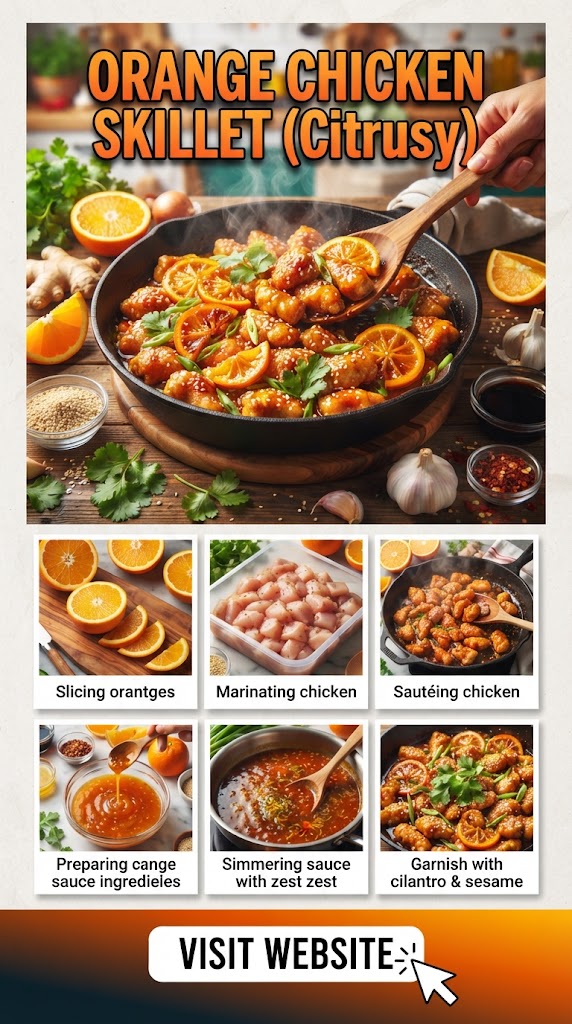
Orange Chicken Skillet is a bright, flavorful dinner that brings together tender pieces of chicken, fresh orange juice, garlic, ginger, and a glossy citrus sauce in one convenient pan. It has the sweet-tangy character people love about orange chicken, but the skillet method makes it especially practical for a weeknight meal.
Instead of deep-frying the chicken and preparing several separate components, this recipe uses lightly browned chicken pieces cooked directly in a skillet before they are coated in a homemade orange sauce. The result is juicy chicken with caramelized edges and a sauce that is fresh, fragrant, sticky, and wonderfully citrusy.
This recipe is easy enough for a busy evening but flavorful enough to serve when you want something that feels a little special. Serve it over steamed rice, cauliflower rice, quinoa, or alongside roasted vegetables for a complete meal.
Why You’ll Love This Orange Chicken Skillet
There are plenty of reasons to keep this recipe in your regular dinner rotation.
It is made in one skillet.
The chicken and sauce are prepared in the same pan, which means fewer dishes and less cleanup.
The sauce tastes fresh.
Fresh orange juice and orange zest provide a much brighter citrus flavor than bottled orange-flavored sauces.
The chicken stays tender.
Cutting the chicken into evenly sized pieces and cooking it just until done helps prevent dry meat.
It is customizable.
You can make the sauce sweeter, tangier, spicier, or more savory depending on your taste.
It works with many side dishes.
Rice is a classic choice, but cauliflower rice, noodles, quinoa, steamed vegetables, and salad can all work beautifully.
It is perfect for family dinners.
The combination of sweet orange flavor and savory chicken makes it appealing to both adults and children.
Complete Orange Chicken Skillet Recipe
Recipe Overview
Prep Time: 15 minutes
Cook Time: 20–25 minutes
Total Time: 35–40 minutes
Servings: 4
Course: Dinner
Cuisine: Asian-inspired
Cooking Method: Skillet
Difficulty: Easy to moderate
Ingredients
For the Chicken
- 1 ½ pounds boneless, skinless chicken breasts or chicken thighs
- 1 teaspoon salt
- ½ teaspoon black pepper
- ½ teaspoon garlic powder
- ½ teaspoon paprika
- ¼ cup cornstarch
- 2 tablespoons neutral cooking oil, such as avocado, canola, or vegetable oil
For the Orange Sauce
- ¾ cup fresh orange juice
- 1 tablespoon finely grated orange zest
- ¼ cup low-sodium soy sauce
- 2 tablespoons honey
- 1 tablespoon rice vinegar
- 1 tablespoon freshly grated ginger
- 2 cloves garlic, finely minced
- 1 tablespoon brown sugar, optional
- 1 teaspoon toasted sesame oil
- ¼ teaspoon red pepper flakes, optional
- 1 tablespoon cornstarch
- 2 tablespoons cold water
For Finishing
- 2 green onions, thinly sliced
- 1 tablespoon sesame seeds
- Additional orange zest, optional
- Fresh orange slices, optional
- Chopped fresh cilantro, optional
Ingredient Notes
Chicken
Chicken breast works particularly well because it cooks quickly and provides lean, tender pieces. Chicken thighs are an excellent alternative if you prefer richer flavor and a more forgiving cut of meat.
If using chicken breasts, avoid cutting the pieces too small. Pieces around 1 to 1½ inches are ideal because they develop browned edges while remaining juicy inside.
Fresh Orange Juice
Fresh orange juice is one of the most important ingredients in this recipe. It provides natural acidity and a bright citrus aroma.
For the best flavor, use freshly squeezed juice whenever possible. If your oranges are particularly sweet, you can slightly reduce the honey or brown sugar.
Orange Zest
Do not skip the zest if you want a strong orange flavor. Orange zest contains aromatic oils that give the sauce an intense citrus fragrance.
When zesting the orange, grate only the colorful outer layer. Avoid the white pith underneath because it can taste bitter.
Soy Sauce
Low-sodium soy sauce allows you to control the saltiness of the finished sauce. Regular soy sauce can also be used, but you may want to reduce the added salt on the chicken.
Honey
Honey adds sweetness while also helping the sauce develop a beautiful glossy finish. You can substitute maple syrup if desired.
Rice Vinegar
Rice vinegar balances the sweetness of the orange juice and honey. It keeps the sauce from tasting overly sweet.
Ginger
Fresh ginger provides warmth and a subtle spicy flavor. Ground ginger can be used in a pinch, but fresh ginger gives the sauce a much more vibrant taste.
Garlic
Fresh garlic adds savory depth and complements the orange beautifully.
Cornstarch
Cornstarch has two purposes in this recipe. It helps lightly coat the chicken so it browns nicely, and it thickens the orange sauce.
How to Make Orange Chicken Skillet
Step 1: Prepare the Chicken
Start by patting the chicken dry with paper towels.
This small step makes a noticeable difference. Removing excess moisture helps the chicken brown rather than steam when it hits the hot skillet.
Cut the chicken into bite-sized pieces approximately 1 to 1½ inches in size.
Place the chicken in a large bowl.
Add:
- Salt
- Black pepper
- Garlic powder
- Paprika
- Cornstarch
Toss thoroughly until every piece is lightly coated.
The cornstarch should form a thin coating rather than a thick layer. You want just enough to encourage browning and help the eventual sauce cling to the chicken.
Step 2: Prepare the Orange Sauce
While the chicken is being prepared, make the sauce.
In a medium bowl, whisk together:
- Orange juice
- Orange zest
- Soy sauce
- Honey
- Rice vinegar
- Fresh ginger
- Minced garlic
- Brown sugar, if using
- Sesame oil
- Red pepper flakes, if using
Do not add the cornstarch slurry yet.
Taste a tiny amount of the uncooked sauce and adjust it if necessary.
If you prefer a sweeter sauce, add a little more honey.
If you prefer a sharper citrus flavor, add a little more rice vinegar.
For additional heat, increase the red pepper flakes.
Step 3: Heat the Skillet
Place a large skillet over medium-high heat.
A large stainless-steel skillet, cast-iron skillet, or nonstick skillet can work.
Add the cooking oil and allow it to heat for approximately 30–60 seconds.
The oil should be hot enough that a piece of chicken immediately begins to sizzle when added.
Do not overcrowd the skillet. If necessary, cook the chicken in two batches.
Overcrowding lowers the temperature of the pan and can cause the chicken to release moisture rather than brown.
Step 4: Brown the Chicken
Carefully place the chicken pieces in the hot skillet in a single layer.
Allow them to cook undisturbed for approximately 2–3 minutes.
This gives the underside time to develop a golden-brown crust.
Turn the chicken pieces and continue cooking for another 2–3 minutes.
Continue turning occasionally until the chicken is browned on multiple sides and nearly cooked through.
The exact cooking time will depend on the size of your chicken pieces.
Do not worry if the chicken is not completely cooked at this point. It will finish cooking in the orange sauce.
Transfer the chicken to a clean plate.
Step 5: Make the Cornstarch Slurry
In a small bowl, combine:
- 1 tablespoon cornstarch
- 2 tablespoons cold water
Whisk until smooth.
Make sure there are no dry lumps.
Always mix cornstarch with cold water before adding it to a hot liquid. Adding dry cornstarch directly to the hot sauce can create unpleasant lumps.
Step 6: Deglaze the Skillet
Reduce the heat to medium.
Pour the orange sauce mixture into the same skillet.
Use a wooden spoon or silicone spatula to gently scrape the bottom of the pan.
Those browned bits left behind from the chicken are full of flavor and will become part of the sauce.
Bring the sauce to a gentle simmer.
Avoid immediately boiling it aggressively. A gentle simmer gives the ingredients time to combine while reducing the risk of burning the honey or sugar.
Step 7: Thicken the Orange Sauce
Whisk the cornstarch slurry once more because the cornstarch may settle at the bottom.
Slowly pour it into the simmering orange sauce while stirring continuously.
Within approximately 1–3 minutes, the sauce should begin to thicken.
You are looking for a glossy consistency that coats the back of a spoon.
If the sauce becomes too thick, add a tablespoon or two of water or orange juice.
If it remains too thin, simmer it for another minute or two.
Remember that the sauce will continue to thicken slightly as it cools.
Step 8: Return the Chicken to the Skillet
Add the browned chicken back into the skillet.
Toss the chicken through the orange sauce until every piece is coated.
Continue cooking for approximately 3–5 minutes, or until the chicken is completely cooked through and the sauce clings beautifully to the pieces.
For food safety, chicken should reach an internal temperature of 165°F (74°C) at the thickest part.
Avoid cooking the chicken much longer than necessary because overcooking can make it dry.
Step 9: Finish the Dish
Turn off the heat.
Sprinkle the skillet with sliced green onions and sesame seeds.
For an extra citrusy finish, add a little freshly grated orange zest.
You can also garnish with thin orange slices or chopped cilantro.
Allow the skillet to rest for about 1–2 minutes before serving.
This gives the sauce a moment to settle and cling to the chicken.
What Does Orange Chicken Skillet Taste Like?
The flavor is a balanced combination of sweet, savory, tangy, citrusy, and lightly spicy.
The orange juice provides bright acidity and natural sweetness.
Orange zest intensifies the citrus aroma.
Soy sauce contributes saltiness and savory depth.
Garlic and ginger provide warmth and complexity.
Honey rounds out the sharp citrus notes and gives the sauce a glossy texture.
Rice vinegar adds acidity that prevents the dish from becoming overly sweet.
Sesame oil contributes a subtle nutty aroma.
Together, these ingredients create a sauce that is flavorful without being overwhelmingly heavy.
How to Get Perfectly Browned Chicken
One of the best parts of this recipe is the contrast between browned chicken and glossy orange sauce.
Follow these simple tips for better browning.
Dry the Chicken
Moisture is the enemy of browning.
Pat the chicken thoroughly before seasoning.
Use a Hot Skillet
The skillet should be properly heated before adding the chicken.
Avoid Overcrowding
Give the pieces space.
If the chicken is packed tightly together, it will steam.
Leave the Chicken Alone
Do not constantly move the chicken around.
Let it sit against the hot surface long enough to develop color.
Cook in Batches
If your skillet is small, divide the chicken into two batches.
It is better to spend a few extra minutes cooking two batches than to end up with pale, steamed chicken.
Best Side Dishes for Orange Chicken
Steamed White Rice
Steamed jasmine rice is one of the easiest and most traditional choices.
Its mild flavor allows the orange sauce to remain the star.
Brown Rice
Brown rice adds a nuttier flavor and more texture.
Cauliflower Rice
For a lower-carbohydrate option, serve the chicken over cauliflower rice.
Fried Rice
You can transform the meal into a more substantial dinner by serving the orange chicken alongside vegetable fried rice.
Quinoa
Quinoa provides a slightly nutty flavor and works particularly well with the citrus sauce.
Steamed Broccoli
Broccoli provides color, texture, and a mild flavor that complements the sweet orange sauce.
Green Beans
Quickly steamed or sautéed green beans make a simple vegetable side.
Stir-Fried Vegetables
Bell peppers, carrots, snow peas, mushrooms, and broccoli can all be cooked separately and served with the chicken.
How to Make Orange Chicken Spicy
If you enjoy heat, this recipe is easy to customize.
Add ½ teaspoon red pepper flakes for mild heat.
For a hotter version, use 1 teaspoon or more.
You can also add:
- Sriracha
- Chili garlic sauce
- Sambal oelek
- Fresh sliced chili peppers
- Cayenne pepper
Add spicy ingredients gradually because the sweetness of the orange sauce can make heat surprisingly noticeable.
How to Make It Less Sweet
If you prefer savory dishes, reduce the honey and skip the optional brown sugar.
You can also add an additional teaspoon of rice vinegar.
Another option is to increase the soy sauce slightly, although you should do this carefully because too much can make the sauce salty.
How to Make Extra Orange Flavor
For a more intense citrus profile:
- Use freshly squeezed orange juice.
- Add extra orange zest.
- Finish the dish with fresh orange zest.
- Add a small splash of orange juice just before serving.
You can also add a small amount of lemon zest for a sharper citrus note.
Chicken Breast vs. Chicken Thighs
Both work well.
Chicken Breast
Chicken breast is lean, mild, and easy to cut into bite-sized pieces.
It is best cooked carefully because it can become dry if overcooked.
Chicken Thighs
Chicken thighs contain more fat and tend to remain juicy even if they cook a little longer.
They also provide a richer flavor.
For maximum tenderness, boneless skinless chicken thighs are an excellent choice.
Can You Use Frozen Chicken?
Frozen chicken should be completely thawed before cutting and cooking for this recipe.
Cooking partially frozen chicken can result in unevenly cooked pieces, with the exterior becoming overdone before the center reaches a safe temperature.
Thaw chicken safely in the refrigerator or by using an appropriate cold-water thawing method.
How to Store Leftovers
Allow leftover orange chicken to cool slightly before transferring it to an airtight food-safe container.
Refrigerate within a reasonable time after cooking.
Properly refrigerated leftovers are generally best enjoyed within 3–4 days.
Keep the chicken and sauce together so the meat remains moist.
How to Reheat Orange Chicken
The microwave is the fastest method.
Place the chicken in a microwave-safe dish and cover loosely.
Heat in short intervals, stirring between intervals, until hot.
For better texture, reheat the chicken gently in a skillet over medium-low heat.
Add a splash of water or orange juice if the sauce has become too thick.
Avoid very high heat because the sugar in the sauce can burn.
Can You Freeze Orange Chicken?
Yes, although the texture of the sauce may change slightly after freezing and thawing.
Cool the cooked chicken completely.
Place it in an airtight freezer-safe container.
Freeze for up to approximately 2–3 months for best quality.
Thaw overnight in the refrigerator.
Reheat gently in a skillet over medium-low heat.
If the sauce seems thick after thawing, add a small amount of water or orange juice while reheating.
Make-Ahead Instructions
You can prepare several components ahead of time.
Prepare the Chicken
Cut the chicken and season it shortly before cooking.
For best results, don’t let the cornstarch-coated chicken sit for an excessively long period because moisture can make the coating gummy.
Prepare the Sauce
The orange sauce mixture can be prepared several hours ahead and refrigerated.
Whisk it before adding it to the skillet.
Prepare the Garnishes
Slice the green onions and prepare the orange zest in advance.
Keep them refrigerated until needed.
Common Mistakes to Avoid
Using Too Much Cornstarch
A heavy coating can become thick and gummy.
Use only enough to lightly coat the chicken.
Burning the Sauce
Honey and sugar can burn quickly.
Once the sauce is added, keep the heat around medium and stir regularly.
Overcooking the Chicken
Chicken continues cooking after it is removed from high heat.
Return it to the sauce only long enough to finish cooking.
Not Balancing the Sauce
A good orange sauce needs a balance of sweetness, acidity, saltiness, and savory flavor.
If it tastes too sweet, add rice vinegar.
If it tastes too sharp, add a little honey.
If it tastes flat, a small amount of soy sauce can add depth.
Overcrowding the Pan
This is one of the most common causes of pale chicken.
Use a large skillet or cook in batches.
Variations to Try
Orange Chicken and Broccoli
Add steamed broccoli during the final few minutes of cooking.
The broccoli absorbs some of the orange sauce and makes the meal more substantial.
Orange Chicken and Bell Peppers
Sauté sliced red, yellow, and green bell peppers before cooking the chicken.
Remove them temporarily, cook the chicken, and return the peppers when the sauce is added.
Orange Chicken with Pineapple
Add small pieces of pineapple for a tropical variation.
The pineapple works especially well with the orange and ginger flavors.
Spicy Orange Chicken
Increase the red pepper flakes and add a little chili garlic sauce.
Creamy Orange Chicken
For a different interpretation, add a small amount of coconut milk after the sauce begins simmering.
This creates a richer, slightly tropical sauce.
Orange Chicken Lettuce Wraps
Instead of serving the chicken over rice, spoon it into crisp lettuce leaves.
Top with green onions and sesame seeds.
Orange Chicken Bowls
Create a complete bowl with:
- Rice
- Orange chicken
- Broccoli
- Carrots
- Cucumber
- Green onions
- Sesame seeds
Drizzle with additional orange sauce before serving.
Frequently Asked Questions
Can I use bottled orange juice?
Yes. Fresh orange juice is recommended because it provides a brighter flavor, but bottled juice can work when fresh oranges aren’t available.
If using bottled juice, choose an unsweetened variety.
Can I use orange marmalade?
You can, but the sauce will be significantly sweeter.
If using marmalade, reduce the honey and taste the sauce before adding additional sugar.
Can I make this gluten-free?
Yes. Use gluten-free tamari or a certified gluten-free soy sauce and verify that all other ingredients are gluten-free.
Can I make it dairy-free?
Yes. This recipe is naturally dairy-free as written.
Can I make it ahead?
Yes. Cooked orange chicken can be refrigerated and reheated gently. For the freshest texture, however, it is best served soon after cooking.
Can I use chicken thighs?
Absolutely. Boneless, skinless chicken thighs are especially good for this recipe because they remain juicy.
Why is my sauce too thin?
It may need more simmering time or a properly prepared cornstarch slurry.
Combine 1 teaspoon additional cornstarch with 2 teaspoons cold water and add it gradually if necessary.
Why is my sauce too thick?
Add a small amount of water or orange juice and stir over low heat until the desired consistency is reached.
Expert Tips for the Best Orange Chicken Skillet
Use fresh citrus whenever possible.
Fresh orange juice and zest give the sauce a much more vibrant flavor.
Don’t skip the zest.
The zest provides concentrated orange aroma.
Brown the chicken well.
A golden crust adds complexity and prevents the chicken from tasting bland.
Balance the sauce.
Sweetness should not overpower the citrus and savory elements.
Use moderate heat once the sauce is added.
This protects the honey and sugar from burning.
Taste before serving.
A final taste lets you adjust sweetness, acidity, salt, and spice.
Garnish at the end.
Fresh green onion, sesame seeds, and orange zest provide contrast and make the dish look restaurant-worthy.
Nutrition Notes
Exact nutrition values depend on the ingredients and portion sizes used.
A serving of this orange chicken provides protein from the chicken along with carbohydrates from the orange juice, honey, and cornstarch.
For a lighter meal, serve it with cauliflower rice and steamed vegetables.
For a more substantial dinner, serve it over jasmine rice or brown rice.
If reducing sodium is important, choose low-sodium soy sauce and avoid adding unnecessary salt.
Serving Suggestions
For a simple weeknight dinner, serve the orange chicken over hot jasmine rice with steamed broccoli.
For a colorful dinner bowl, layer rice with chicken, peppers, carrots, and broccoli before topping everything with green onions and sesame seeds.
For a lighter meal, use cauliflower rice and add a large serving of steamed vegetables.
For a party-style meal, serve the chicken as part of an Asian-inspired spread with rice, stir-fried vegetables, cucumber salad, and spring rolls.
Final Recipe Card
Orange Chicken Skillet
Servings: 4
Prep Time: 15 minutes
Cook Time: 20–25 minutes
Total Time: 35–40 minutes
Ingredients
Chicken:
- 1 ½ pounds boneless, skinless chicken
- 1 teaspoon salt
- ½ teaspoon black pepper
- ½ teaspoon garlic powder
- ½ teaspoon paprika
- ¼ cup cornstarch
- 2 tablespoons cooking oil
Orange Sauce:
- ¾ cup fresh orange juice
- 1 tablespoon orange zest
- ¼ cup low-sodium soy sauce
- 2 tablespoons honey
- 1 tablespoon rice vinegar
- 1 tablespoon fresh ginger
- 2 cloves garlic
- 1 tablespoon brown sugar, optional
- 1 teaspoon sesame oil
- ¼ teaspoon red pepper flakes, optional
- 1 tablespoon cornstarch
- 2 tablespoons cold water
Garnish:
- 2 sliced green onions
- 1 tablespoon sesame seeds
- Additional orange zest, optional
Directions
- Pat the chicken dry and cut it into bite-sized pieces.
- Season with salt, pepper, garlic powder, and paprika.
- Toss the chicken with cornstarch until lightly coated.
- Whisk together orange juice, orange zest, soy sauce, honey, rice vinegar, ginger, garlic, brown sugar, sesame oil, and red pepper flakes.
- Heat oil in a large skillet over medium-high heat.
- Add chicken in a single layer and cook for 2–3 minutes per side until browned and nearly cooked through.
- Transfer chicken to a plate.
- Add the orange sauce to the skillet and scrape up the browned bits.
- Mix cornstarch with cold water to create a smooth slurry.
- Whisk the slurry into the simmering sauce.
- Cook for 1–3 minutes until the sauce becomes glossy and thick.
- Return the chicken to the skillet.
- Cook for another 3–5 minutes, or until the chicken reaches 165°F (74°C).
- Turn off the heat.
- Garnish with green onions, sesame seeds, and additional orange zest.
- Serve immediately over rice, cauliflower rice, or your favorite vegetables.
Conclusion
Orange Chicken Skillet is an easy way to bring bold citrus flavor to the dinner table without relying on complicated cooking techniques. Tender browned chicken is coated in a homemade sauce made from fresh orange juice, orange zest, garlic, ginger, soy sauce, honey, and rice vinegar. The result is a colorful, glossy, sweet-and-savory meal with plenty of fresh citrus character.
The recipe is also flexible enough to fit different preferences. Make it spicy with chili flakes, add broccoli or peppers for extra vegetables, swap chicken breast for thighs, or serve it over cauliflower rice for a lighter option.
Most importantly, the entire meal comes together in one skillet, making it practical for busy weeknights while still delivering the satisfying flavor of a restaurant-inspired orange chicken dinner.