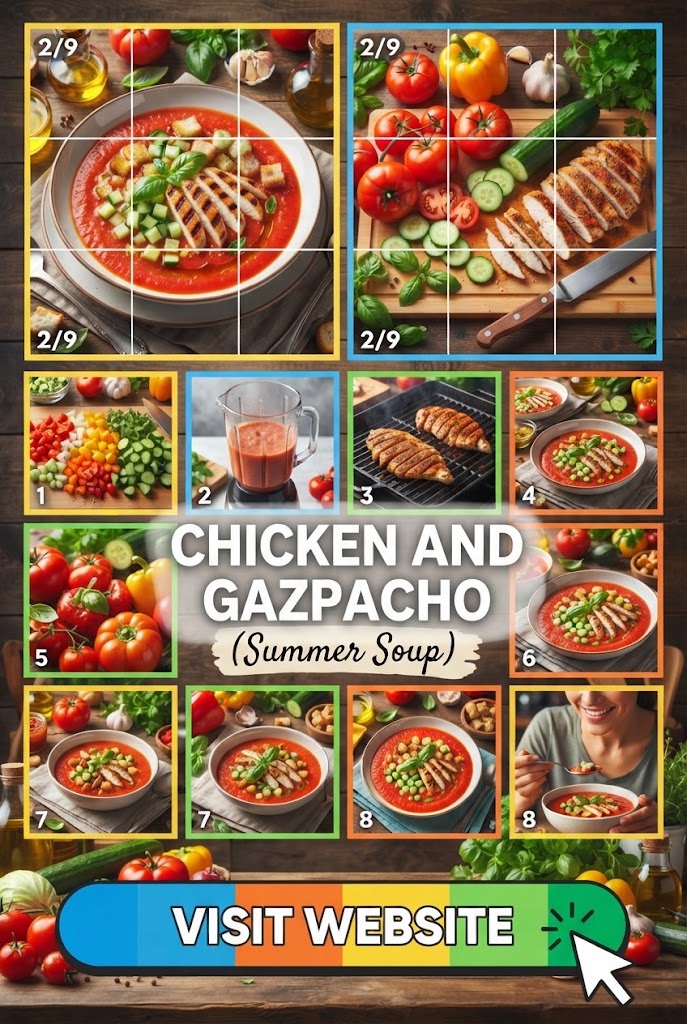

Chicken and Gazpacho (Cold Soup)
When the mercury rises and the sun beats down with relentless intensity, the culinary world looks for a hero. We seek a dish that cools the palate, hydrates the body, and provides enough energy to sustain us through the long summer days. Enter the timeless combination of Chicken and Gazpacho.
This isn’t just a meal; it is a nutritional powerhouse and a sensory masterpiece. Gazpacho, the iconic cold soup of Spain, offers a vibrant explosion of raw vegetables and tangy vinegar, while the addition of chicken transforms it from a light appetizer into a protein-rich, satisfying entrée. In this comprehensive guide, we will dive deep into the history, the science, the techniques, and the countless variations of this legendary pairing.
The Soul of Andalusia: A Brief History of Gazpacho
To understand why chicken and gazpacho work so well together, we must first understand the origins of the soup itself. While today we associate gazpacho with a vibrant red tomato base, its roots go back much further than the arrival of the tomato in Europe.
The Pre-Tomato Era
The word “gazpacho” is believed to be derived from the Mozarabic word for “bread soaked in water and oil.” Long before the Spanish explorers brought tomatoes back from the New World, shepherds and farmers in the Iberian Peninsula were making a primitive version of the soup. It was a humble mixture of stale bread, water, garlic, olive oil, and vinegar, pounded together in a mortar and pestle. It served as a cooling, hydrating meal for those working in the grueling heat of the fields.
The Arrival of the Tomato
In the 16th century, the “New World” introduced the tomato to Spain. Initially treated with suspicion, the tomato eventually became the star of the show. By the 19th century, the red Gazpacho Andaluz we know and love today had become a staple across the southern regions of Spain.
The Modern Evolution: Adding Protein
Traditionally, gazpacho was a vegetarian affair. However, as global palates evolved and the demand for balanced, “one-bowl” meals grew, the culinary world began experimenting. Adding chicken—whether poached, grilled, or roasted—added a layer of satiety and texture that made the soup a viable main course for the modern health-conscious diner.
Why Chicken and Gazpacho Are a Nutritional Powerhouse
In the world of functional nutrition, few pairings are as synergistic as chicken and gazpacho. Here is why this duo is a health enthusiast’s dream:
1. Superior Hydration
Gazpacho is essentially “liquid salad.” Made primarily of tomatoes, cucumbers, and peppers, it is packed with water and electrolytes. During the summer, we lose minerals through sweat; the salt and vinegar in gazpacho help replenish these essential components.
2. High-Quality Protein for Muscle Maintenance
By adding chicken breast or thigh, you introduce lean protein. Protein is essential for muscle repair and keeping you full longer. When paired with the high-fiber vegetables in the soup, it prevents blood sugar spikes and keeps energy levels stable.
3. Lycopene and Antioxidants
Tomatoes are the world’s primary source of lycopene, a powerful antioxidant linked to heart health and skin protection against UV damage. Interestingly, the healthy fats in the olive oil used in gazpacho significantly increase the body’s ability to absorb this lycopene.
4. Low Calorie, High Volume
If you are looking to manage your weight, this dish is a secret weapon. You can consume a large bowl of gazpacho with a generous portion of chicken for a fraction of the calories found in a traditional pasta dish or sandwich.
The Anatomy of the Perfect Gazpacho
The difference between a mediocre gazpacho and a life-changing one lies in the quality of the ingredients and the precision of the technique.
The Vegetables: The “Holy Trinity”
- The Tomatoes: Use the ripest tomatoes you can find. Roma or Plum tomatoes are traditional because they have a high flesh-to-seed ratio. However, a mix of heirloom tomatoes can add a complex, sweet-tart profile.
- The Cucumber: In Spain, the smaller, thinner-skinned Persian or Lebanese cucumbers are preferred. They are less bitter and have fewer seeds than the large American garden varieties.
- The Peppers: Green Italian frying peppers (cubanelles) provide a subtle, grassy heat that is essential for the authentic Andalusian flavor. Avoid using only red bell peppers, as they can make the soup too sweet.
The Aromatics: Garlic and Onion
A little goes a long way. Use fresh garlic (remove the germ/inner core if it’s sprouted to avoid bitterness) and a small amount of white onion or shallot. You want a background hum of piquancy, not a lingering sharp aftertaste.
The Acid and the Fat: Vinegar and Oil
- Sherry Vinegar (Vinagre de Jerez): This is non-negotiable for authenticity. It has a nutty, complex acidity that cider or white vinegar simply cannot replicate.
- Extra Virgin Olive Oil: Use the best you can afford. This isn’t just for cooking; it’s a primary flavor component. It creates the creamy, emulsified texture that defines a professional gazpacho.
The Thickener: Bread
Traditionalists use a hunk of day-old sourdough or “pan de hogaza.” It is soaked in water and blended with the vegetables to provide body and a velvety mouthfeel. For those on a gluten-free diet, you can substitute bread with a handful of raw almonds or simply omit it for a thinner, juice-like consistency.
Masterclass: Preparing the Chicken for Cold Soup
One of the biggest mistakes home cooks make is using dry, overcooked chicken. When chicken is served cold or at room temperature in a soup, any dryness is magnified. Here are three techniques to ensure your chicken is succulent:
1. The Poaching Method (The Softest Texture)
Poaching keeps the chicken incredibly moist.
- The Liquid: Don’t just use water. Use a mix of chicken stock, a splash of white wine, lemon slices, peppercorns, and a bay leaf.
- The Technique: Bring the liquid to a bare simmer (not a boil). Submerge the chicken breasts, turn off the heat, cover the pot, and let them sit for 15-20 minutes. This “passive poaching” ensures the muscle fibers don’t tighten up.
- The Result: Tender, shreddable chicken that absorbs the gazpacho broth.
2. The Sous Vide Method (The Professional Standard)
If you have a sous vide circulator, cook your chicken at 145°F (63°C) for 1.5 hours. This results in a texture that is buttery and perfectly cooked from edge to edge.
3. The Lemon-Herb Grilled Method (The Smoky Contrast)
If you prefer a bit of char to contrast the bright acidity of the soup:
- The Marinade: Use olive oil, lemon zest, dried oregano, and plenty of salt.
- The Cook: Grill over high heat quickly to get char marks while keeping the center juicy.
- The Serving: Slice into thin strips and place on top of the soup just before serving.
Recipe 1: Classic Andalusian Gazpacho with Shredded Poached Chicken
This is the gold standard. It’s vibrant, creamy, and incredibly refreshing.
Ingredients
- 2 lbs ripe Roma tomatoes, cored
- 1 small Persian cucumber, partially peeled
- 1 green bell pepper, deseeded
- 1 clove garlic
- 2 tbsp Sherry vinegar
- 1/2 cup Extra Virgin Olive Oil
- 1 slice of crusty white bread, crust removed
- Salt to taste
- For the Chicken: 2 chicken breasts, poached and shredded
Instructions
- Soak the Bread: Place the bread in a small bowl with a little water and vinegar for 5 minutes.
- Blend the Base: In a high-speed blender, combine the tomatoes, cucumber, pepper, garlic, and the soaked bread. Blend until completely smooth.
- Emulsify: With the blender running on low, slowly drizzle in the olive oil. You will see the color shift from deep red to a beautiful orange-pink as the oil emulsifies.
- Strain (The Secret Step): For a truly professional texture, pass the mixture through a fine-mesh sieve. This removes any lingering bits of skin or seeds.
- Chill: This is crucial. Gazpacho must be ice-cold. Chill in the refrigerator for at least 4 hours, preferably overnight.
- Serve: Ladle the soup into chilled bowls. Top with a generous mound of shredded chicken, a drizzle of olive oil, and some finely diced cucumber and tomato for crunch.
Recipe 2: The Modern Twist — Watermelon Gazpacho with Lime-Zest Chicken
Watermelon adds a sweetness and a lighter body to the soup, making it the ultimate thirst-quencher.
Ingredients
- 4 cups seedless watermelon cubes
- 1 lb tomatoes
- 1 red bell pepper
- 1 tbsp lime juice
- A few mint leaves
- For the Chicken: Grilled chicken strips seasoned with lime zest and chili flakes.
Instructions
- Blend the watermelon, tomatoes, and red pepper until smooth.
- Add lime juice and a pinch of salt.
- Skip the bread for this version to keep it light and watery.
- Serve with the lime-zest chicken on top. The sweetness of the melon paired with the spicy, citrusy chicken is a revelation.
The Art of Presentation: Garnishing Like a Pro
We eat with our eyes first. A bowl of red liquid can look uninspiring without the right garnishes. When serving chicken and gazpacho, think about texture and color:
- Microgreens: A pinch of micro-cilantro or basil adds a pop of green.
- The “Brunoise”: This is a fancy culinary term for very small cubes. Finely dice the vegetables used in the soup (cucumber, pepper, onion) and sprinkle them over the chicken.
- Hard-Boiled Eggs: In many parts of Spain, gazpacho is topped with chopped hard-boiled eggs for extra protein.
- Croutons: If you didn’t blend bread into the soup, add garlic-rubbed toasted croutons on top for crunch.
- Drizzles: A swirl of balsamic glaze or a few drops of chili oil can elevate the flavor profile.
Common Pitfalls and How to Avoid Them
1. The Soup is Too Watery
This usually happens if your tomatoes weren’t ripe enough or you didn’t use bread. You can fix this by blending in half an avocado (for creaminess) or more soaked bread.
2. It’s Too Acidic
If the vinegar is overpowering, don’t add sugar immediately. Try adding more olive oil first to coat the palate, or a little more bread to neutralize the acid.
3. The Garlic is Too Harsh
Next time, try roasting the garlic first or soaking the raw garlic in the vinegar for 10 minutes before blending. This “mellows” the sulfur compounds that cause the bite.
4. The Chicken is Cold and Tough
If you are using leftover chicken, let it come to room temperature before adding it to the ice-cold soup. Putting ice-cold, firm chicken into cold soup can make it feel like rubber.
Wine and Beverage Pairings
What do you drink with a dish that is high in acid and served cold?
- Manzanilla Sherry: This is the traditional pairing. Its salty, oceanic notes perfectly complement the vinegar and tomatoes.
- Rosé: A dry, crisp Provence-style rosé has the fruitiness to stand up to the tomatoes and the acidity to match the soup.
- Albariño: A white wine from the coast of Spain with high acidity and citrus notes.
- Alcohol-Free: A sparkling water with a heavy squeeze of lime and a sprig of mint mirrors the refreshing qualities of the dish.
Frequently Asked Questions (FAQs)
Can I make gazpacho in advance?
Yes! In fact, you should. Gazpacho tastes significantly better the next day after the flavors have had time to meld and the “raw” edge of the garlic and onion has softened. It keeps well in the fridge for up to 3-4 days.
Is gazpacho served as a drink or a soup?
In Spain, it’s both! You can find it served in a glass as a refreshing midday drink, or in a bowl with toppings (like chicken) as a full meal.
Can I use canned tomatoes?
While you can, it won’t be the same. The magic of gazpacho is the flavor of raw, sun-ripened summer vegetables. Canned tomatoes are cooked and will give you something more akin to a cold marinara sauce.
How do I store the chicken?
Keep the chicken separate from the soup until the moment of serving. This prevents the chicken from becoming waterlogged and allows you to control the portion size.
Conclusion: The Ultimate Summer Ritual
Chicken and Gazpacho represent the pinnacle of smart summer eating. It is a dish that respects tradition while embracing the modern need for balanced, nutritious meals. Whether you are hosting a sophisticated garden party or looking for a quick, healthy lunch to fuel your workday, this combination never fails to deliver.
By focusing on high-quality olive oil, the ripest seasonal produce, and perfectly prepared chicken, you turn a simple cold soup into a culinary event. It’s a testament to the idea that the best food doesn’t always require a stove—sometimes, it just requires a blender, a bit of patience, and the finest ingredients nature has to offer.
So, the next time the heat becomes unbearable, skip the heavy stove-top meals. Reach for the tomatoes, fire up the blender, and experience the refreshing, protein-packed wonder of Chicken and Gazpacho. Your body and your taste buds will thank you.